
The short answer
- Aluminum gutters are usually rated for 20 years or more. Vinyl gives out sooner. Copper can outlive the house.
- In New Orleans the metal rarely fails first. The wood behind it does, or the gutter clogs, gets heavy and sags.
- Sagging runs, dripping seams, rust and soft fascia mean it’s time to look at replacing them.
- Two cleanings a year and fixing small leaks early add the most years.
How long do gutters last? The number on the box says one thing. A house under two live oaks in Lakeview says another.
We’ve been putting up gutters around New Orleans and Metairie since 2006. This is what we look at: what each material can handle, what wears it out early here, and how to tell if yours are done.
How long do gutters last by material?
Start with the metal. The ranges below are what manufacturers and industry guides usually quote. Your house can beat them or fall short, depending on how the gutters were hung and how often they get cleaned.
Built to last
- Aluminum. It’s what most homes here have. It won’t rust, and it’s usually rated for 20 years or more.
- Seamless aluminum. Same metal, formed in one piece per wall. Seams are where gutters start leaking, so fewer seams usually means more years.
- Copper. Costs a lot more and can last for decades. You’ll spot it on some older homes in the Garden District and Uptown.
Wears out sooner
- Vinyl. Cheap and easy to put up, but our summer sun makes it brittle. It cracks and sags earlier.
- Galvanized steel. Tough until the coating wears through. After that it rusts, and the humidity here speeds it up.
- Sectional gutters. Whatever the metal, every joint is a leak waiting to happen.
How they’re hung matters just as much. Old spike-and-ferrule fasteners work loose over the years. Hidden hangers screwed into solid fascia hold on far longer. And a gutter with the wrong slope keeps a puddle in it, which wears it out from the inside.
Choosing between the two common types? Here’s how seamless and sectional gutters compare.
Why gutters wear out faster in New Orleans
A gutter in Phoenix has an easy life. Ours don’t.
The rain
New Orleans averages more than 60 inches of rain a year, according to the National Weather Service office for New Orleans. A lot of it comes in short, heavy bursts. Every one of those storms loads the gutters to the edge, and weak seams give up sooner.
The humidity
Leaves don’t dry out in a gutter here. They turn into a wet, heavy sludge that sits against the metal for weeks, eating at the finish and the sealant.
The trees
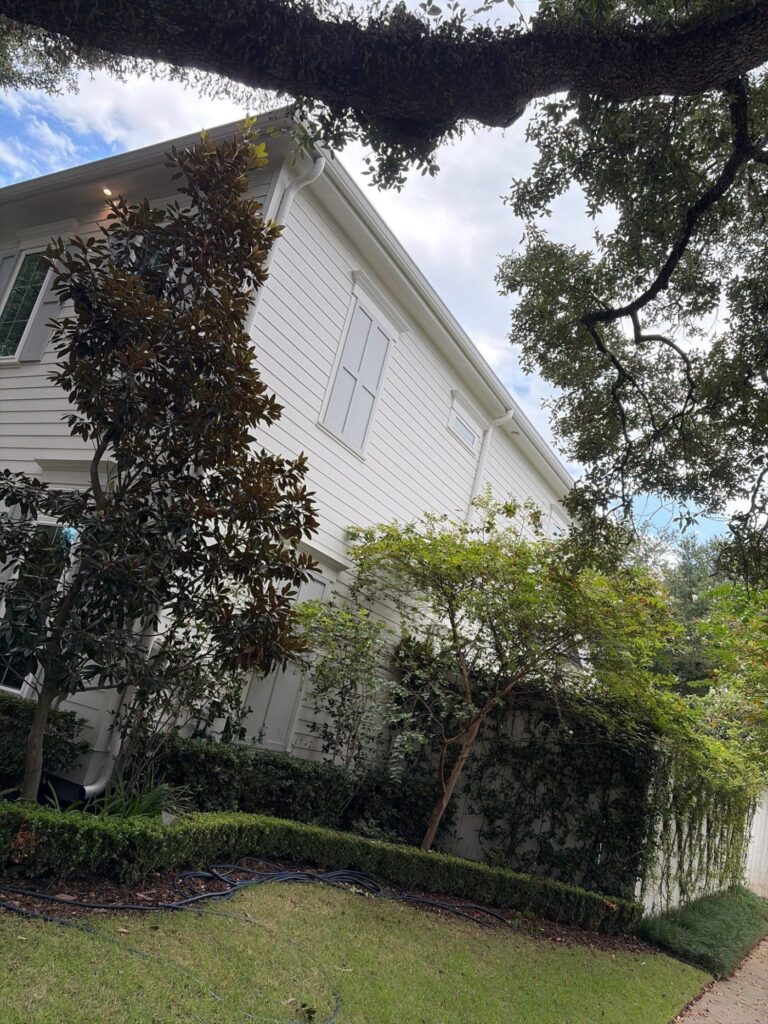
Live oaks are part of why Uptown and Old Metairie look the way they do. They’re also why gutters fill up every spring. On one Lakeview home with big oaks and magnolias, we put in 337 feet of 6-inch gutters and 200 feet of gutter guards, because the owner was tired of cleaning them every few months. A clogged gutter full of water is heavy. That weight is what bends hangers and starts the sag.
The storms
Hurricane season runs June 1 to November 30. Wind pulls at anything that’s already loose, and falling limbs dent what isn’t. Gutters that were hanging on by a few screws are usually the first casualties.
The wood behind them
This is the one most people miss. Gutters are screwed into the fascia board at the roof edge. When they overflow for years, that board stays wet and starts to rot. Once it’s soft, even a brand-new gutter has nothing to hold onto. On a two-story home in Metairie where we hung 736 feet of bronze gutters, the crew had to replace rotten roof wood first. Another Metairie job was two steps for the same reason: soffit and fascia repair, then 288 feet of new gutters.

Signs your gutters are near the end
You can spot most of this from the ground. The best time is during a rain or right after one.
- A dip in the middle of a run. Water collects there and pulls the hangers down.
- A gap between the gutter and the roof edge. Loose fasteners, or soft wood behind them.
- Drips at the seams and corners. The sealant has failed.
- Rust spots or holes. Common on old steel gutters, and they spread.
- Peeling paint or dark streaks under the gutter. Water is running down the wall instead of the downspout.
- Puddles along the foundation. The water isn’t being carried away.
- Fascia that gives when you press it. If it feels spongy, it needs work.
One of these on its own is usually a repair. Three or four along the same wall usually means that run is done. Here’s more on spotting fascia rot.
Repair or replace?
Plenty of gutters just need a fix. The question is whether you’re patching a sound system or a worn-out one.
Usually a repair
- One leaking seam or corner.
- A few loose hangers on solid wood.
- A clogged or disconnected downspout.
- One short section with the wrong slope.
Usually time for new ones
- Rust or holes along long stretches.
- Sagging on most sides of the house.
- Leaks at seam after seam.
- Rotten fascia that has to come off anyway.
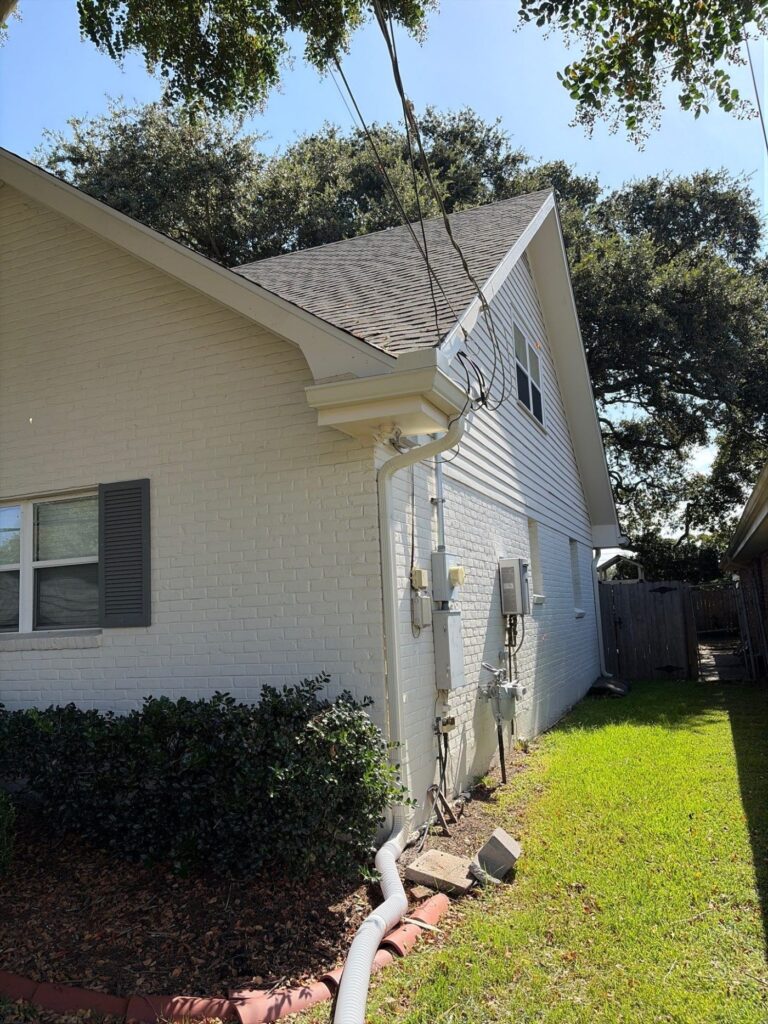
Planning a new roof or new fascia? That’s the cheapest moment to swap the gutters too, since the edge of the roof is already open. A full replacement usually takes our crew one to two days, depending on the size of the house. If it’s a small problem, our gutter repair crew can take care of it. If the whole system is tired, see how gutter replacement in New Orleans works.
How to make gutters last longer
None of this is complicated. Most of it is just doing it on time.
- Clean them twice a year. Once after the spring oak drop, once in the fall. More if you’re under big trees. Here’s how often gutters should be cleaned.
- Walk around after a big storm. Look for bent sections, loose hangers and branches on the roof.
- Fix a drip the season you see it. A leaking seam this year is soft fascia next year.
- Keep downspouts open. One blocked downspout backs up the whole run.
- Trim branches over the roof. Fewer leaves, less weight, less sludge.
- Think about guards if you’re under trees. Our gutter guards page covers the options.
What we check on a visit
When someone asks us “how long do mine have left?”, this is what our crew looks at.
- Slope. Does the water run to the downspouts, or sit in the trough?
- Seams and corners. Old sealant, gaps, drip stains on the wall.
- Hangers and fascia. Are the screws tight, and is the wood behind them solid?
- Downspouts. Clear, connected, and dumping water away from the house?
- Size. Can the gutters keep up with a downpour on your roof? Every home we’ve done lately in Lakeview, Metairie and Uptown got 6-inch gutters for this reason.
Then you get a straight answer: clean them, fix them, or replace them. We’ve been working on gutters in New Orleans and Metairie since 2006. Call (504) 305-0325 for a free estimate.
FAQ: how long do gutters last?
How long do aluminum gutters last in New Orleans?
They’re usually rated for 20 years or more. Here, clogs, sagging and wet fascia are what cut that short. Keep them clean and they have a good shot at the full range.
Do seamless gutters last longer than sectional gutters?
Usually, yes. Leaks start at seams, and a seamless gutter only has joints at the corners.
Can a hurricane ruin my gutters?
It can. Wind pulls off loose sections and limbs bend the rest. Check them after every big storm, especially if they were already loose.
Should I replace gutters when I replace my roof?
If they’re old, it usually makes sense. The roof edge is already open, so any rotten fascia gets fixed first and the new gutters go up on solid wood.
How do I know if my gutters need repair or replacement?
One leak or a couple of loose hangers is a repair. Rust, sagging and leaks on most sides of the house usually mean new gutters.
Do gutter guards make gutters last longer?
They help. Less debris means less weight and better drainage. They still need a look now and then.
Not sure how much life yours have left? Call (504) 305-0325 for a free estimate.
Are your gutters near the end?
We’ll tell you if they need a cleaning, a repair or a replacement.