- (504) 305 0325
- 8400 Old Gentilly Road New Orleans, LA 70127
- 529 Kelly St, Destin, FL 32541
- (850) 738 5188

Gutters Tech installs, repairs and maintains seamless gutters for homeowners across New Orleans East. That includes everything from the lake-facing subdivisions built up starting in the 1960s to the neighborhoods still rebuilding block by block near the Industrial Canal. We also handle roofing, siding and the rest of the exterior. So request a free estimate, or call to get on the schedule this week.
(Offer Ends December 31)
New Orleans East's drainage problems made headlines again in December 2025, when the Cerise Pump Station went offline for valve and pump work and a temporary pump at the nearby Castle Manor sewage station failed, sending sewage into the Dwyer Canal near Wilson Avenue. The odor lingered from Wilson to Wright Boulevard for weeks, and the Sewerage & Water Board later confirmed the Cerise outage “likely increased the amount of sewer infiltrating into the stormwater system” along Bonita, Galahad, Arthur, Charlene, and Citrus Drives and Lurline Street. S&WB didn't finish all 15 identified repairs until July 2026, with weekly water-quality testing that started that February — a reminder that in a neighborhood built by pumping down a former marsh, the stormwater and sewer systems here are more tangled together than most homeowners realize.
That drainage vulnerability isn't new. New Orleans East flooded during Hurricane Katrina in August 2005 mainly from levee breaches along the Gulf Intracoastal Waterway, not a single canal failure — roughly 80 percent of the neighborhood took on more than six feet of water, and almost half saw more than eight, hitting Pines Village, Little Woods, Plum Orchard, and the Read Boulevard corridor hardest. Two decades later, the long-abandoned Six Flags site is finally moving again — the city and developer Bayou Phoenix signed a $5 million agreement in August 2025 that specifically funds site restoration and improved drainage on the 230-acre property, a small but real sign that the area's stormwater infrastructure is getting fresh investment rather than being left to age out on its own.
Our approach: we size gutters and downspouts for homes built on reclaimed marshland where the water table sits close to the surface, route discharge well clear of foundations often poured on fill, and treat every job here the way the neighborhood itself has had to operate for 60 years — assuming the drainage system needs help, not assuming it'll keep up on its own.
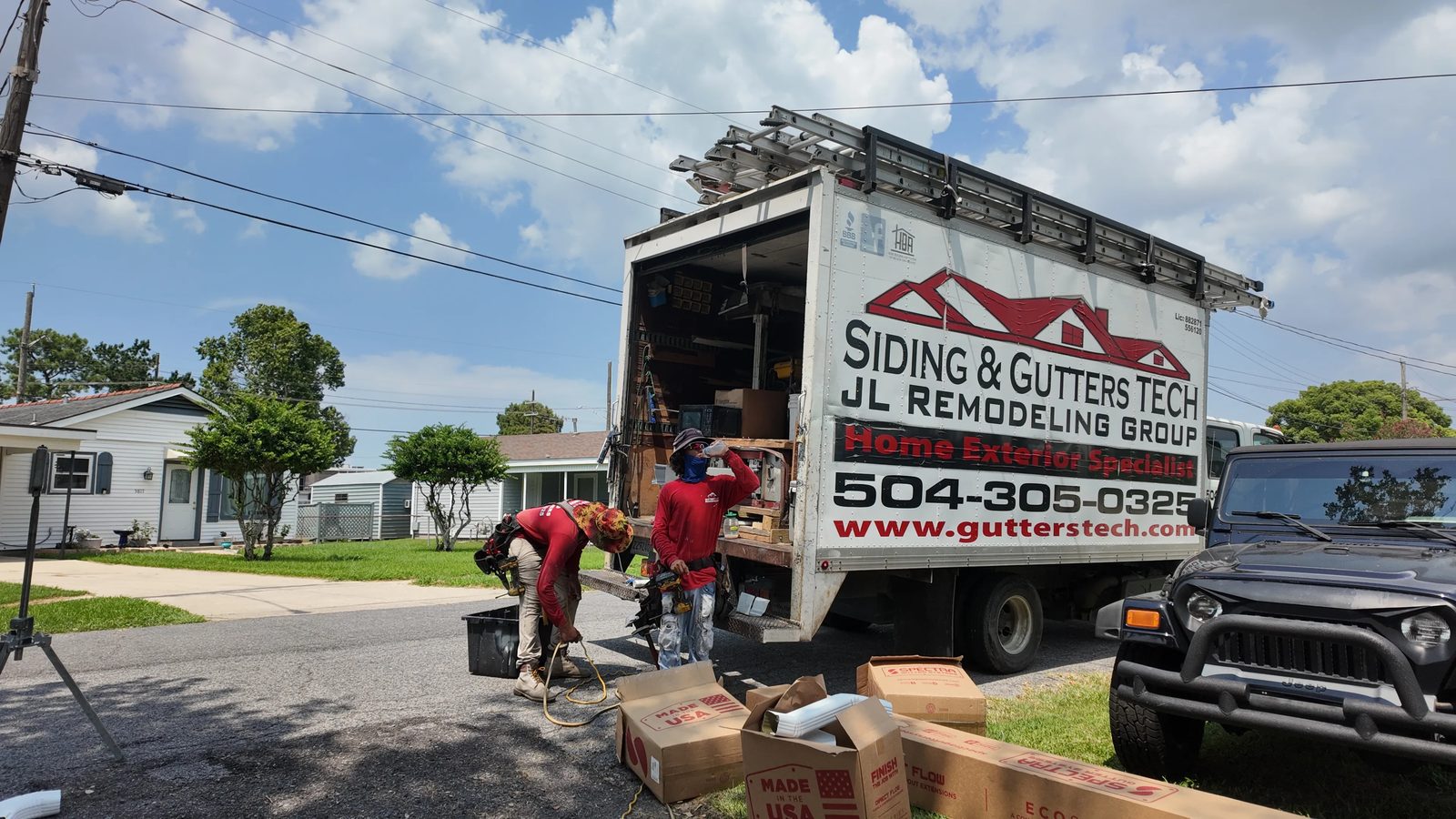
First, we inspect your roof edge, gutters and downspouts. Next, we measure every run on site. Then, we form seamless gutters on our truck, right in your driveway. After that, we take down the old gutters and install the new system. Finally, we clean up and walk you through the finished job.
The roof, siding and gutters often fail together in this climate. That's why Gutters Tech handles all of them. As a result, a New Orleans East property owner doesn't have to coordinate separate contractors.
Seamless aluminum systems sized for reclaimed-marsh drainage and New Orleans East's canal-and-pump network.
Learn more →Scheduled around the mature tree canopy in older subdivisions built up since the 1960s.
Learn more →Storm and wind-driven-rain repair through full replacement for homes across the East's subdivisions.
Learn more →HardiePlank and fiber-cement siding suited to New Orleans humidity and the East's mid-century housing stock.
Learn more →Water-damage drywall repair and texture-matching, often paired with the roof or gutter fix that caused it.
Learn more →Repairing the wood rot and soffit damage a long-clogged gutter often causes before it's noticed.
Learn more →Driveways, walkways, and slab work built to hold up to reclaimed-marsh soil movement and storm seasons.
Learn more →Custom patio covers sized for New Orleans East's subdivision lots, from lakefront to inland streets.
Learn more →Humidity-rated paint systems and prep for the East's mix of rebuilt and original housing stock.
Learn more →Or fill up the form, our team will call you
Property owners in New Orleans East call us because we already understand this neighborhood was built by leveeing and pumping down a marsh, not by draining naturally toward the river the way older parts of the city do — which changes how a gutter and downspout system should be sized and routed. We size every job to the actual roof, the actual lot, and the drainage reality underneath it, work residential and commercial properties across the East. Plus, every installation comes with a workmanship warranty. Please contact us for the warranty terms on your project.
Real reviews and job locations from work completed across New Orleans East.
Our crews install, repair and clean gutters in these nearby neighborhoods every week. See gutter installation in New Orleans, gutter repair in New Orleans or all New Orleans service areas.
In December 2025, the Cerise Pump Station went offline for repairs and a temporary pump at the nearby Castle Manor sewage station failed at the same time, sending sewage into the Dwyer Canal near Wilson Avenue. The Sewerage & Water Board didn't finish all of the identified repairs until July 2026, which is a useful reminder that stormwater and sewer infrastructure here are closely linked.
No. New Orleans East flooded mainly from levee breaches along the Gulf Intracoastal Waterway in August 2005, not a single outfall-canal failure like the 17th Street or London Avenue canals on the other side of the Industrial Canal. Roughly 80 percent of the neighborhood took on more than six feet of water.
Yes. The city and developer Bayou Phoenix signed a $5 million agreement in August 2025 covering site restoration and improved drainage on the 230-acre property, which is a sign of renewed infrastructure investment in the area after nearly two decades of the site sitting abandoned.
Yes. Housing here ranges from 1960s-era subdivisions built when the area was first developed to homes rebuilt after Katrina. Also, each era of construction tends to need a different gutter sizing and cleaning approach.
Yes. Besides gutters, Gutters Tech covers roofing, siding, soffit and fascia, painting, sheetrock and concrete. When a storm damages more than one part of the exterior, we fix the roof and siding first. Then we move on to the gutters and the interior.