Sectional — Jointed
Seamless — Continuous
Seamless vs. Sectional Gutters: What's the Difference?
How each type is made, where they actually fail, what they cost over 10 years rather than just on install day, and what New Orleans and Gulf Coast rooflines specifically demand from a gutter setup.
Every gutter system on a house falls into one of two categories: sectional, built from pre-cut lengths joined together, or seamless, formed on-site as one continuous run. That single difference — how many seams a gutter has — drives almost every other difference between them, from leak risk to lifespan to cost.
This guide breaks down how each type is made, where they actually fail, what they cost over 10 years rather than just on install day, and what New Orleans' rain, tree canopy, and historic rooflines specifically demand from a gutter setup.
Homeowners comparing seamless gutters vs sectional gutters often start by asking which type of gutter costs less, but the real comparison only makes sense once cost, lifespan, and climate performance are weighed together rather than the install-day quote alone. This guide lays out the pros and cons of each system so you can choose the right gutter system for your specific roofline, budget, and climate — because gutters play a crucial role in protecting a foundation, fascia, and landscaping from water damage, and the wrong choice compounds problems for years rather than solving them.
Sectional Basics
What Are Sectional Gutters?
Sectional gutters are the standard system most hardware stores sell, and they're still a common, reasonable option for plenty of homes.
Also known as sectional gutters, this type of gutter system is what most people picture when they think of a standard installation. Traditional gutters may arrive from a big-box store as stock-length pieces that still need custom cutting at corners, and traditional gutters often require careful planning around how many joints a given roofline will need before work even starts. Traditional gutters require this upfront planning specifically because the gutters are connected end-to-end with hardware and sealant rather than formed as one continuous piece.
How Sectional Gutters Are Made and Installed
Sectional gutters come in pre-cut lengths, typically 10 or 20 feet, that get joined end to end with connectors and sealant to form a full run along the roofline. Because the sections are manufactured off-site and simply cut to length on the job, sectional gutter installation is realistic as a DIY project for a homeowner comfortable with basic tools.
Common Materials and Profiles
Sectional gutters are most commonly made from aluminum or vinyl, with galvanized steel showing up on some older or budget installations. Aluminum sectional gutters are generally more affordable upfront compared to seamless aluminum systems, which is part of why sectional gutters remain popular for cost-conscious projects.
Seamless Basics
What Are Seamless Gutters?
Seamless gutters solve the sectional design's core weakness — the joints — by not having any along the length of a single run.
When a homeowner requests a new seamless gutter setup, seamless gutters are most commonly made using aluminum coil stock fed through a truck-mounted forming machine right at the property. Unlike sectional pieces, these continuous gutters are made from one unbroken length of metal for each straight run, which is exactly the trait that gives seamless gutters their name and their advantage. Seamless gutters are made this way specifically to eliminate the joint failures that sectional setups experience over time, and anyone shopping for a new gutter while weighing looks alongside long-term performance tends to notice that continuous line first.
How On-Site Fabrication Works
Seamless gutters are fabricated on site using a portable roll-forming machine that feeds in a flat coil of metal and shapes it into a continuous gutter cut to the exact length of a given roofline. Because seamless gutters are formed on the spot rather than assembled from stock lengths, there are no joints along a straight run — only at inside and outside corners and at the downspout outlets themselves.
K-Style, Half-Round, and Box-Style Profiles
Seamless aluminum gutters are available in several profiles: K-style, the most common shape with a decorative front resembling crown molding; half-round, a smooth curved profile common on historic and higher-end homes; and box-style, a squared-off commercial-grade profile built for higher water volume. Whichever profile you choose, seamless installations are most commonly made from aluminum, though copper, steel, and zinc are all available for a premium.
It helps to compare seamless and sectional gutters side by side before diving into cost and leak risk. Seamless gutters are available in K-style, half-round, and box profiles, and seamless gutters offer a cleaner line with fewer places to fail; sectional setups, still known as traditional gutters in most supply catalogs, are less expensive to buy but require more joints across a long run. The differences between seamless gutters vs sectional setups narrow somewhat on a short, simple roofline and widen considerably on a long or complex one, which is why there's no single best gutter for every home — only the type of gutter setup that fits a specific roofline.
K-style gutters are the default recommendation for most homes in either sectional or seamless form, since they combine solid water capacity with a molded front edge that reads as more finished than a plain half-round. Whether you land on seamless or sectional gutters ultimately comes down to budget and roofline: seamless gutters offer fewer joints, a longer service life, and a cleaner appearance, and these advantages of seamless gutters are difficult to match with a sectional setup. Choosing between seamless and traditional gutters, or between traditional and seamless gutters if you'd rather frame it that way, really is a choice between long-term durability and short-term savings. The same logic applies whether you're comparing seamless and regular gutters on a simple ranch roofline or weighing seamless gutters and sectional gutters on a complex, multi-gable historic home — and it's worth remembering that the choice between seamless gutters vs regular gutters rarely comes down to material alone, since the seam count changes so much of the maintenance and repair picture on its own.
SectionalK-Style, Half-Round, Box
Lower material cost, but every profile still ships in stock lengths that need joints across a long run.
SeamlessK-Style, Half-Round, Box
Same three profiles, formed as one continuous piece cut to the exact length of your roofline.
Where It Fails
Leak Resistance and Joint Failure
This is where the practical difference between seamless and sectional gutters shows up most directly.
Why Every Seam Is a Future Leak Point
A seam is a mechanical connection sealed with caulk or sealant rather than a single continuous piece of metal, and every one of those connections is a future point of failure rather than a permanent fix. Sectional gutters can have a joint every 10 to 20 feet along a single run, and each one is a spot where water pressure, thermal expansion, and simple age can eventually work the seal loose. Sectional gutters may hold up fine for years before a single joint finally gives out, which is part of why the failure often catches property owners by surprise rather than showing obvious warning signs in advance.
How Sealant and Joints Break Down Over TimeSealant is not a permanent material — it dries out, cracks, and loses adhesion under repeated cycles of sun exposure, temperature swings, and standing water, typically needing attention well before the metal around it wears out. Once a joint's sealant fails, water finds the gap and starts dripping behind the gutter and down the fascia, often well before it's visible from the ground.
Why Seamless Gutters Have Far Fewer Failure Points
The Seamless AdvantageSeamless gutters are far less prone to this specific failure mode simply because there's so much less seam to fail in the first place — the only sealed connections on a seamless run are at corners and downspout drops, not every 10 to 20 feet along a straight section. Fewer joints translate directly into fewer leak points, which is the single biggest practical argument in the seamless vs sectional gutters debate.
Fewer joints translate directly into fewer leak points.
The Real Cost
Cost Comparison: Upfront vs. Long-Term
Cost is where sectional gutters win on paper and seamless gutters try to make their case over time.
Installation Cost Per Linear Foot
Every dollar figure in this section is a national or regional average, not a quote — actual cost depends on your home's linear footage, material choice, roofline complexity, and site access. Request a free estimate for exact numbers on your property.
Seamless gutters typically cost $6 to $25 per linear foot installed, depending on material, with a standard aluminum system running most properties somewhere between $900 and $3,000 total. Sectional gutters are generally more affordable upfront, particularly for a DIY installation using pre-cut stock from a home improvement store, though a professionally installed sectional setup narrows that price gap to roughly 10 to 20% below seamless rather than the much larger gap seen against DIY pricing.
Gutter cost comparisons that stop at the estimate miss the bigger picture. Sectional installation stays cheaper upfront compared to seamless gutters, and that gap in what a sectional installation costs upfront compared to seamless gutters is real — but seamless gutters cost more per linear foot precisely because that price includes on-site fabrication, specialized equipment, and a labor-only installation with no DIY option to undercut it.
10-Year Total Cost of Ownership
Why the Cost Gap Narrows Over Time
Sectional gutters typically last 10 to 15 years before needing replacement, while seamless gutters typically last 20 to 30 years, which means anyone comparing sectional and seamless gutters purely on install-day price is missing at least one, and possibly two, replacement cycles on the sectional side over the same 20-to-30-year window. Factor in the lower repair and resealing costs seamless gutters require over that same period, and the true 10-year cost gap between the two options is considerably smaller than the upfront quote alone suggests.
Install Cost Per Linear Foot
Material Matters
Durability and Lifespan by Material
Material matters as much as seam count when it comes to how long a gutter setup actually lasts.
Aluminum, Vinyl, Steel, and Copper Compared
Aluminum seamless gutters typically last 25 to 30 years and are the most common choice for both sectional and seamless installations alike. Vinyl gutters, common on lower-cost sectional setups, typically last only 10 to 20 years and can become brittle in direct sun over time. Galvanized steel gutters last 15 to 25 years depending on climate, with humidity and salt air both accelerating rust at cut edges and fastener points. Copper is the premium option on either system type, commonly lasting 50 to 100-plus years, though at a material cost well above aluminum or steel.
Aluminum25–30 Years
The most common material for both sectional and seamless systems alike.
Vinyl10–20 Years
Common on lower-cost sectional setups; can become brittle in direct sun.
Galvanized Steel15–25 Years
Humidity and salt air both accelerate rust at cut edges and fasteners.
Copper50–100+ Years
The premium option on either system type, at a material cost well above the rest.
How Sectional and Seamless Systems Age Differently
A sectional system's weakest points age first — the joints, connectors, and sealant lines — often requiring resealing or connector replacement well before the aluminum or vinyl itself has worn out. A seamless system ages more evenly across its length, since there's no joint to fail faster than the surrounding metal, which is a meaningful part of why seamless gutters last longer as a complete system rather than just as a material. Well-maintained seamless gutters offer a meaningfully longer service life than a comparable sectional setup built from the same base metal, simply because there's no weak seam dragging the average down.
Install & Repair
Installation and Repair Differences
How each system goes in, and what happens when something needs fixing, differs almost as much as the systems themselves.
DIY vs. Professional Installation Requirements
Sectional gutter installation is accessible to a reasonably handy DIYer, since the components come pre-cut and are joined with screws, rivets, and sealant using basic tools. Seamless gutter installation requires a specialized on-site roll-forming machine that most property owners don't own and can't easily rent, which makes seamless installation essentially a professional-only project regardless of how comfortable someone is with a ladder.
SectionalDIY-Friendly
Pre-cut components joined with screws, rivets, and sealant using basic tools.
SeamlessProfessional-Only
Requires a specialized on-site roll-forming machine most property owners don't own.
Repairing a Damaged Section vs. a Continuous Run
Damage to one section of sectional gutters is often a simple, contained repair, since a contractor can unclip and replace just the damaged length without touching the rest of the run. A dent or split in a seamless run is a different story, since there's no built-in break point — repair usually means cutting out and re-fabricating the damaged section on site, or in some cases replacing the full continuous run if the damage sits somewhere awkward to splice.
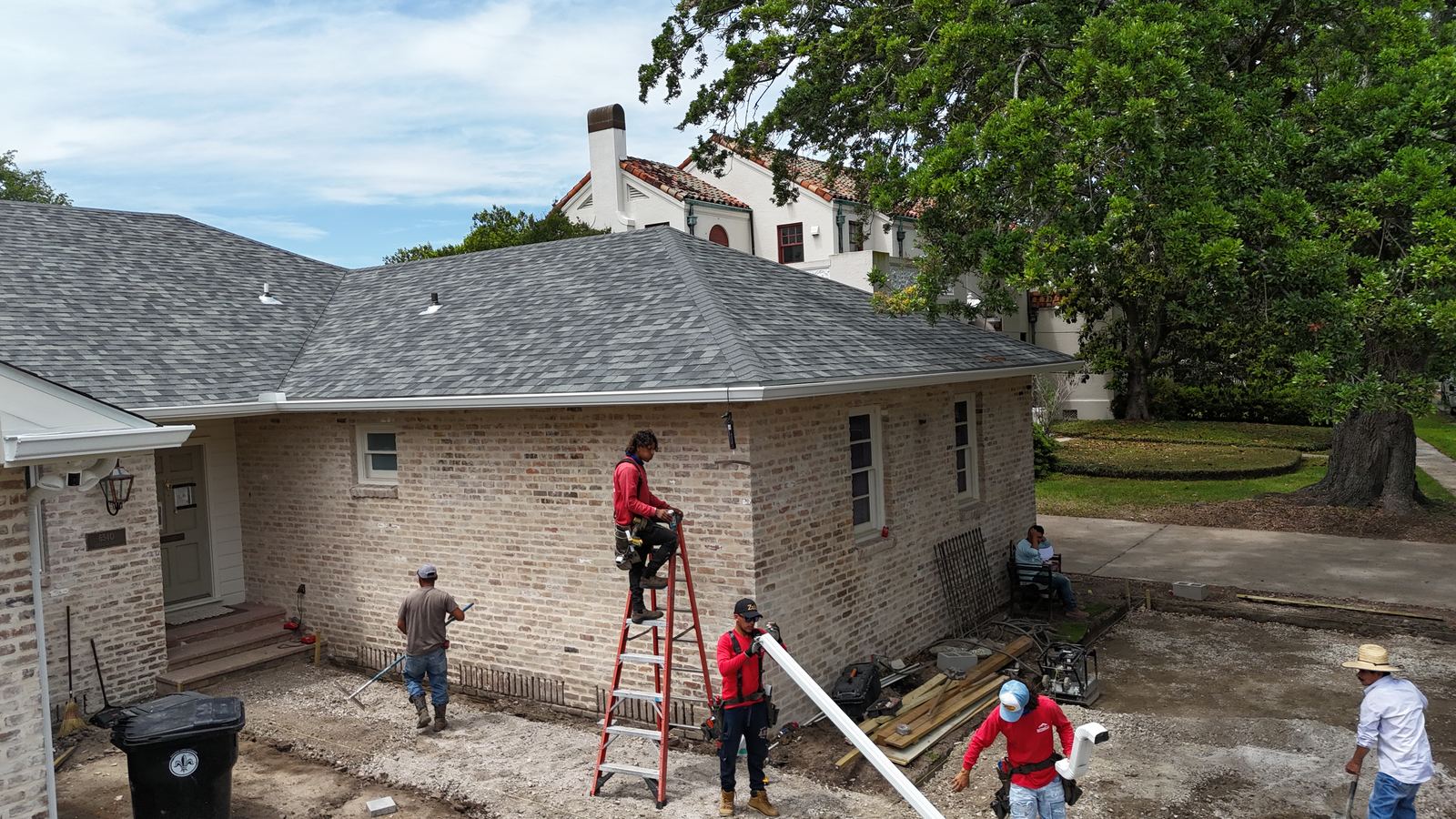
Seamless gutters are formed on site to the exact length of the roofline, eliminating joints along the straight run.
Upkeep
Maintenance and Cleaning Requirements
Fewer joints change the maintenance picture too, though not as completely as some marketing suggests.
Why Fewer Joints Mean Less Debris Buildup
Every joint on a sectional run is a slight ridge or overlap where debris can catch and start a clog, so a run with several joints accumulates buildup at more points along its length than a smooth seamless run does. Seamless gutters require less maintenance compared to sectional setups specifically because there are fewer of these catch points for leaves and grit to collect against. Properly installed seamless gutter systems rarely need more than one or two cleanings a year outside of exceptionally heavy tree cover, versus a sectional run that may need extra attention right at each joint even between full cleanings.
What Seamless Gutters Still Don't Eliminate
Not Maintenance-FreeSeamless gutters are far from maintenance-free, despite what some marketing implies. Leaves, pine needles, and roof grit still collect in a seamless run exactly the same way they do in a sectional one, since the seam count has nothing to do with what falls onto the roof above — regular cleaning, or a properly matched gutter guard, is still necessary either way.
Curb Appeal
Curb Appeal and Resale Value
Beyond function, the two systems also look noticeably different from the ground.
Visible Seams vs. a Clean Continuous Line
Sectional gutters show a visible seam line every 10 to 20 feet, along with the connector hardware at each joint, which is noticeable on close inspection even when well-maintained. Seamless gutters present a single, unbroken line along the entire roofline, which reads as a cleaner, more finished look, especially on longer runs or homes with simple, straight fascia lines.
Color and Finish Options
Both seamless and sectional aluminum gutters are available in a wide range of factory-baked colors matched to trim or roofline, though seamless runs are typically formed from continuous painted coil stock, which keeps the finish perfectly consistent across an entire run with no color-match seams to worry about.
What Appraisers Actually NoticeAppraisers and buyers rarely call out gutters by name on an inspection report unless something is visibly wrong, but a clean, well-fitted exterior does register as part of a home's overall condition during a walkthrough. Visible sagging, mismatched patch repairs, or a run of sectional gutters with several different-aged segments can read as deferred maintenance even when the system is technically still functional, while a single continuous seamless run tends to blend into the roofline instead of drawing attention to itself.
Gulf Coast Performance
Which Performs Better in New Orleans and Gulf Coast Conditions?
Everything above applies broadly. Here's what changes once you're specifically weighing gutter type for a New Orleans or Emerald Coast home.
Hurricane-Season Rainfall and Why Gutter Size Matters More Than Material Alone
New Orleans' hurricane-season downpours push a lot of water through a gutter setup fast, and gutter size ends up mattering as much as whether the system is seamless or sectional. A gutter that's too small will overflow regardless of how well it's sealed, which is worth remembering before assuming seam count alone solves a drainage problem.
5-Inch vs. 6-Inch Seamless Systems for Heavy Downpours
A standard 5-inch K-style gutter holds roughly 1.2 gallons of water per linear foot and is generally rated for about half an inch of rain per hour over a 1,000-square-foot roof section before it starts to overflow. A 6-inch gutter holds around 2 gallons per foot — roughly 40% more capacity — which on a 30-foot run works out to about 60 gallons moving through the system versus 36 gallons for the same run in 5-inch. For a New Orleans roof facing regular hurricane-season downpours, upsizing to 6-inch, in either seamless or sectional form, is often a more meaningful upgrade than the seamless-vs-sectional choice on its own.
Water Capacity Per Linear Foot
Live Oak, Magnolia, and Cypress Debris Load on Joints vs. Continuous Runs
New Orleans' live oaks drop leaves year-round rather than in one autumn window, and magnolias and bald cypress each add their own debris on top of that, which means a local gutter setup deals with organic material moving through it across most of the calendar. On a sectional run, that steady debris load has more opportunities to catch and build up at each joint; a seamless run gives all of that debris fewer places to snag along the way, for the same reasons covered in the maintenance section above.
Salt Air and Corrosion Resistance for Destin and Emerald Coast Homes
Salt air accelerates corrosion on any exposed metal fastener or connector, and a sectional setup simply has more of those exposed connection points than a seamless run does. For a Destin or Emerald Coast property within the first mile or so of open water, that difference in exposed hardware can meaningfully affect how long a gutter setup's joints hold up before needing attention.
Material and Fastener Choices That Hold Up Near the Coast
Aluminum resists corrosion better than uncoated steel in a coastal environment, and stainless steel fasteners hold up considerably longer than standard-grade hardware within that first mile of salt exposure. This mirrors the same salt-air material logic that applies to roofing choices and protective gutter covers on the Emerald Coast — the closer to open water, the more the specific alloy and fastener grade matter relative to price.
New OrleansDebris Load
Year-round live oak, magnolia, and cypress drop means more material catching at every sectional joint.
Destin / Emerald CoastSalt-Air Corrosion
Open-water salt exposure accelerates rust at every exposed fastener and connector point.
Flood-Zone and Elevated New Orleans Homes: Sizing Downspouts for Drainage
Large parts of New Orleans sit at or below sea level and rely on an engineered pump system to move stormwater away, which makes a home's own downspout sizing and placement matter more here than in a city where gravity alone carries water off quickly. Homes built on piers or otherwise elevated need downspouts sized and routed to carry water well clear of the foundation, since a system that dumps water right at the base of an elevated structure adds to exactly the kind of localized flooding pressure this city already manages citywide.
Matching Seamless Gutters to Historic New Orleans Rooflines
Older New Orleans homes — shotgun houses, French Quarter buildings, and other historic housing stock — often have settled over decades in ways that leave the fascia uneven or slightly out of plumb, which makes a straight, consistent gutter run harder to achieve than it would be on new construction. Seamless fabrication is particularly well suited to this kind of irregular fascia, since the gutter is custom-formed to the actual roofline's exact length and any custom bends or miters needed at corners, rather than forcing a fixed pre-cut section to fit a roofline it wasn't made for.
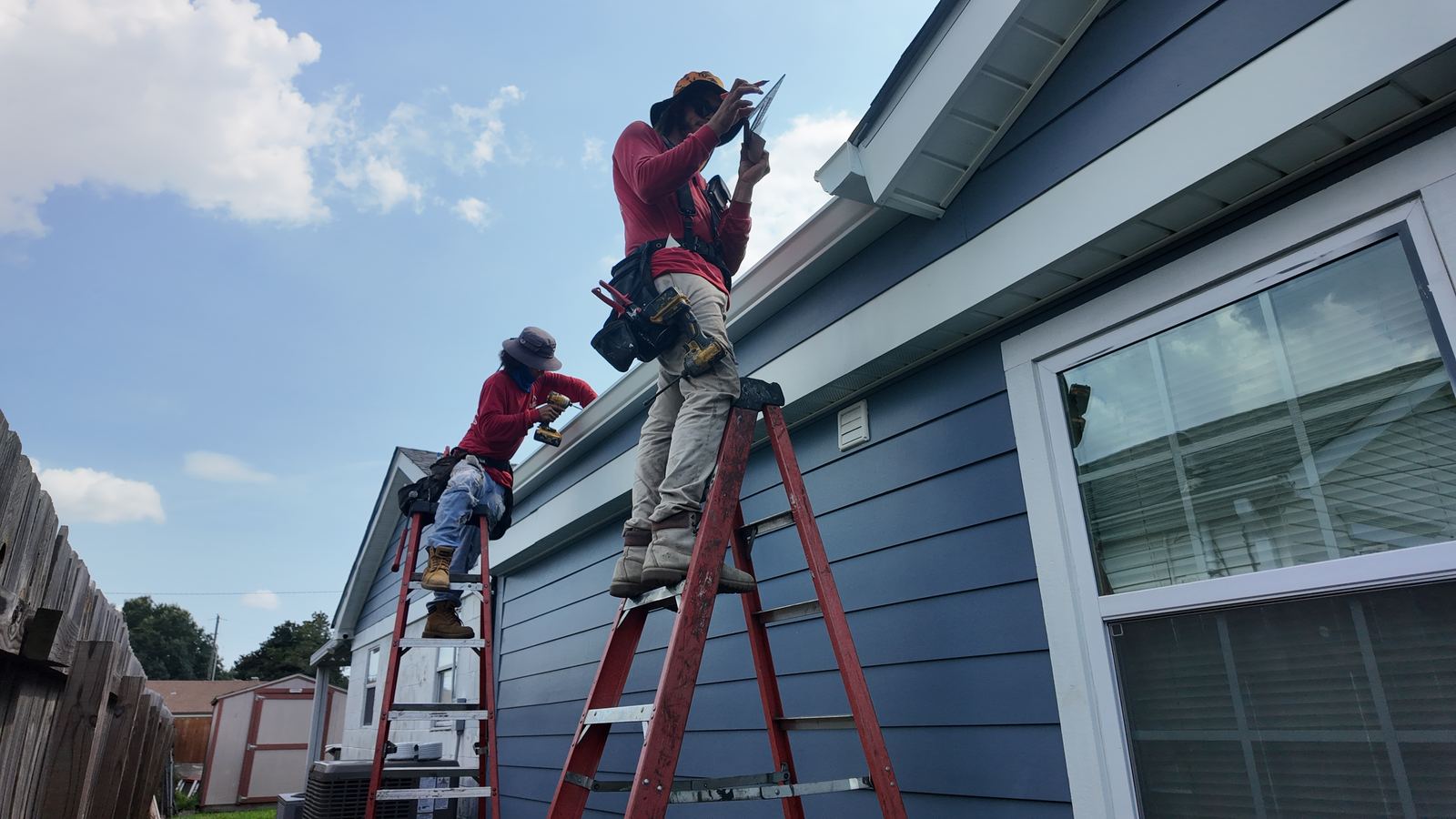
Seamless fabrication adapts to the uneven fascia common on historic New Orleans rooflines.
| Factor | Sectional | Seamless |
|---|
| Typical lifespan | 10–15 years | 20–30 years |
| Install cost per linear foot | Lower upfront | $6–$25/lf |
| Installation | DIY-friendly | Professional-only |
| Leak points | Joint every 10–20 ft | Only at corners/outlets |
| Maintenance | More catch points | Fewer catch points |
| Repair approach | Swap the damaged section | Re-fabricate on site |
| Appearance | Visible seam every run | Single unbroken line |
| Best fit | Tight budget, simple roofline | Historic, tree-heavy, coastal homes |
Full Exterior Plan
Pairing Your Gutter System With Gutter Guards and Other Exterior Upgrades
A gutter setup, seamless or sectional, is also the foundation everything else attached to it depends on.
Why Gutter Guards Perform Best on a Properly Sized Seamless System
A gutter guard installed on an undersized or poorly sealed gutter setup doesn't fix either problem — it just covers it. Pairing gutter guards with a correctly sized seamless setup gives a property owner the full benefit of both upgrades at once: fewer leak points from the seamless run, and less manual cleaning from the guard on top of it. Micro-mesh and reverse-curve guards both perform best when they're fastened to a rigid, continuous gutter edge rather than spanning across a sectional joint, since a joint that flexes even slightly under wind or thermal movement can work a guard's mounting hardware loose over time.
Bundling With Roofing, Siding, and Soffit/Fascia Work
A gutter replacement project is a natural moment to also assess the roofing, siding, and soffit and fascia the gutters attach to, since all of these systems work together during a heavy rain event. GuttersTech can bundle a seamless gutter installation with roofing, siding, and soffit/fascia work as one coordinated exterior project, rather than treating the gutters as a separate afterthought from everything else protecting the house.
The Verdict
Which Should You Choose?
With the technical differences laid out, here's how that translates into an actual recommendation. Property owners who compare seamless gutters vs sectional gutters based on the install-day quote alone are missing the lifespan math covered above, which is really where the decision should start.
When Sectional Still Makes Sense
A tight budget, a short-term ownership horizon, a simple straight roofline with easy access, or a homeowner planning a DIY installation are all reasonable cases where sectional gutters could still make sense, particularly on a smaller or secondary structure like a shed or detached garage.
When Seamless Is the Better Long-Term Investment
For a primary home, especially one with significant tree cover, an irregular or historic roofline, or an owner planning to stay put for a decade or more, seamless gutters are generally the better long-term investment. The fewer failure points, longer lifespan, and cleaner appearance tend to outweigh the higher install-day cost once it's measured against a full replacement cycle instead of a single quote.
A quick way to think through it: a rental property or a shed that just needs to shed water for a few more years leans sectional; a primary residence under heavy live oak or magnolia canopy, a historic French Quarter or Garden District home with an irregular roofline, or a coastal Destin property facing salt-air exposure all lean seamless. The gap in most of these cases isn't close once the full replacement cycle and repair history are counted rather than just the install-day number.
Lean SectionalRental or Shed
A rental property or a shed that just needs to shed water for a few more years.
Lean SeamlessPrimary or Historic Home
Heavy tree canopy, an irregular historic roofline, or salt-air exposure on the coast.
Frequently Asked Questions
How long do seamless gutters last compared to sectional?
Seamless gutters typically last 20 to 30 years, while sectional gutters typically last 10 to 15 years before needing replacement, largely because sectional systems fail at their joints well before the surrounding material wears out.
Can I install seamless gutters myself?
Not realistically. Seamless gutter installation requires a specialized on-site roll-forming machine that most property owners don't own, which makes it essentially a professional-only project, unlike sectional gutters, which are a realistic DIY option.
Are seamless gutters worth the extra cost in a hurricane-prone area?
For most homes, yes — fewer joints mean fewer points where wind pressure and heavy rain can force a failure, and the longer lifespan generally offsets the higher upfront cost over a full replacement cycle in a storm-prone climate like New Orleans.
Do seamless gutters still need cleaning?
Yes. Seamless gutters still collect leaves, pine needles, and grit the same way sectional gutters do, since seam count doesn't affect what falls onto the roof above — regular cleaning or a properly matched gutter guard is still necessary either way.
What size gutter is best for heavy Gulf Coast rainfall?
A 6-inch gutter, which holds roughly 40% more water than a standard 5-inch system, is generally the better fit for New Orleans and Gulf Coast hurricane-season rainfall, regardless of whether the system is seamless or sectional.
Schedule a Free Gutter Consultation
Choosing between seamless and sectional gutters comes down to your budget, your roofline, and how long you're planning to stay in the house — not a single universal answer. GuttersTech can walk your property, recommend the right gutter system for your home's specific roofline and rainfall demands, and bundle the work with leaf guards, roofing, siding, or soffit and fascia as one coordinated project.