Fascia: Roofline Component
Rot: 7 Warning Signs
7 Signs of Fascia Rot and Why You Shouldn't Ignore It
The small tells that show up months before a gutter actually falls — and what's really driving the damage in New Orleans and Destin homes specifically.
A homeowner usually notices a failing fascia board the same way: a gutter that used to sit tight against the roofline starts to pull away by an inch, then two, long after the board underneath already went soft.
This kind of damage rarely shows up as one dramatic failure — it shows up as a slow accumulation of small tells that are easy to write off individually. This guide walks through the seven fascia board damage signs worth checking for, what actually causes fascia to break down faster in this specific climate rather than generic "wood rot" advice written for a drier region, and how to tell if fascia needs replacing versus a simple spot repair to protect your home before the damage spreads. If any of this sounds familiar, schedule a free fascia inspection and we'll tell you exactly what we find.
The Basics
What Fascia Does and Why It Fails First
Fascia takes on more structural and weather-exposure responsibility than most homeowners realize, which is part of why fascia problems tend to surface before damage becomes visible anywhere else on the roof.
The Fascia Board's Job Along Your Roofline
The fascia board runs along the lower edge of your roof, capping the ends of the roof rafters and giving the gutter system something solid to mount to. It's also the last line of defense protecting the structure behind it — every gutter fastener drives directly to the fascia, so the board has to stay solid enough to carry the full weight of a gutter system, especially one holding standing water during a heavy Gulf Coast downpour.
Why Water Attacks Fascia From Three Directions
Most homeowners picture the damage as rain running down the front of the board, but fascia actually takes on water three separate ways: rain that runs off the roof edge and behind a compromised drip edge, moisture that gets trapped behind the gutter itself when clogged gutters or debris hold it against the board, and humidity that wicks upward from the soffit below on humid days when there's nowhere for that moisture to go. Any one of those alone will eventually cause water damage; in this climate, a fascia board is usually dealing with all three at once.
Warning Signs
7 Signs Your Fascia Is Rotting
These are the seven warning signs of fascia trouble worth checking for during a walk around the exterior, roughly in the order they tend to appear.
Peeling, Bubbling, or Repeatedly Failing Paint
Peeling or bubbling paint on fascia boards, in the same spot no matter how many times it's repainted, usually means moisture is trapped underneath the surface and pushing the finish off from below. A single peeling patch after a hard summer is normal; if the fascia keeps failing in the same spot within a year or two after repainting, that's an early tell that the wood itself is already holding water.
Soft, Spongy, or Crumbling Wood (The Screwdriver Test)
Press a screwdriver into the face of the board at a suspicious spot: solid wood resists with a firm push-back, while soft, spongy wood gives way with little resistance or crumbles outright. This is the single most reliable field test for hidden wood damage, and it works even when the surface paint still looks intact, since decay frequently starts from the inside out.
The Screwdriver TestSolid wood pushes back; soft or crumbling wood means rot has already set in, even under fine-looking paint.
Dark Staining, Discoloration, or Mold/Mildew Growth
Dark streaking or a gray-black discoloration running down from the gutter line is usually water that's been sitting against the board long enough to leave a visible mark or feed mold and mildew growth. In a climate this humid, that kind of discoloration shows up faster than most national guides account for, since the wood rarely gets a long enough dry stretch to fully shed the moisture between rain events.
Gutters Sagging, Pulling Away, or Losing Their Grip
Gutters pulling away from the roofline are one of the clearest signs your fascia boards are already compromised, since a solid board holds gutter fasteners tight regardless of how much water sits in the system. Once the wood under the fastener has softened, the screw simply has nothing solid left to bite into, and the gutter starts working itself loose a little more with every heavy rain.
Visible Holes, Gaps, or Pest Activity
Small holes, sawdust-like debris, or actual insect activity along the board are signs of active pest damage on top of whatever moisture damage is already present, and in this region that combination shows up far more often than a generic wood-damage article would suggest. A gap that's widened between the fascia and the soffit, or one that's opened where the board meets the corner trim, is also worth flagging as visible rot even without other signs of damage.
Water Stains on Siding or Interior Ceilings
Water stains that trail down the siding directly below the fascia, or a discolored patch that shows up on an interior ceiling near an exterior wall, mean water infiltration has already worked its way past the fascia and further into the structure. By the time it reaches the interior, the fascia has usually been compromised for a while and the deterioration is worth taking seriously rather than treating as a one-time leak.
Warped, Split, or Cupped Boards
A fascia board that's visibly warped, split along the grain, or cupped away from the roof edge already shows structural damage, even if it hasn't fully deteriorated through yet. This is usually the last sign to appear, since wood typically has to already be significantly weakened by earlier moisture exposure before it physically distorts.
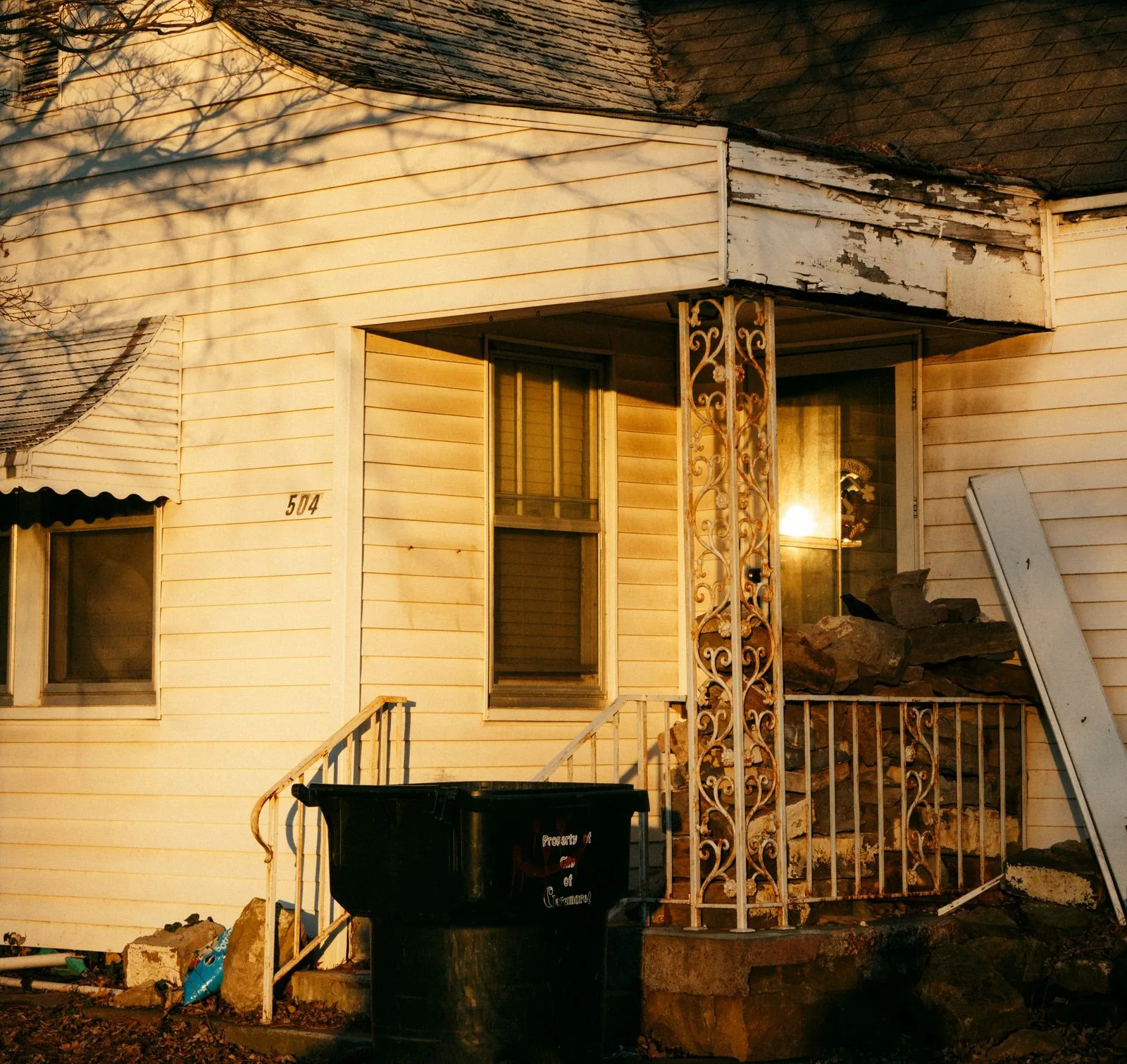
Peeling paint and exposed, softened wood at this corner trim are visible signs the fascia underneath has already started to rot.
Local Causes
What's Really Driving Fascia Rot in New Orleans and Destin
Generic fascia guides are written for freeze-thaw climates where ice expansion drives most of the damage. That mechanism barely applies here — this region has its own specific rotting fascia causes that move faster than a national article would lead you to expect.
Year-Round Humidity, Not Freeze-Thaw, Is Our Real Enemy
New Orleans and the Destin coast almost never get a hard freeze, so the ice-wedging damage most fascia articles warn about isn't the driver here. Instead, sustained high humidity for eight or nine months a year means wood along the roofline rarely gets a real chance to dry out completely between rain events, and that constant low-grade moisture exposure accelerates decay in a way a drier climate's fascia never experiences.
Formosan and Native Subterranean Termites: The Threat Most Guides Never Mention
New Orleans has one of the country's most severe Formosan termite populations, and damp fascia is exactly the kind of softened wood these termites target first. Native subterranean termites add to the pressure region-wide, and neither species gets so much as a mention in most national fascia-damage articles, which tend to frame all of it as pure moisture exposure and skip the pest angle entirely.
Formosan Termite RiskDamp fascia is exactly what Formosan termites target first — a moisture problem here is frequently a pest entry point too.
Hurricane Season Wind-Driven Rain and Drip Edge Failure
Wind-driven rain during a hurricane doesn't behave like ordinary rainfall — high wind pressure can force water sideways and upward behind a compromised or improperly lapped drip edge, soaking the top edge of the fascia from a direction normal rainfall never reaches. This is a distinct damage category from the slow, gradual moisture exposure every competitor article describes, and it can compromise a previously sound board in a single storm rather than over several seasons.
Salt Air Corrosion Along the Emerald Coast
Along Destin and the Emerald Coast, airborne salt speeds up paint failure on fascia boards well beyond what a standard humidity-only estimate would predict, etching finishes and breaking down protective coatings faster in homes closer to the water. Once the paint layer fails early, the bare wood underneath is exposed to salt-laden moisture with none of the protection it was supposed to have for years longer.
New OrleansHumidity + Termites
Humidity and Formosan termite pressure attack fascia year-round.
Destin / Emerald CoastSalt Air + Wind
Salt air accelerates paint failure; wind-driven rain attacks the drip edge.
Left Unaddressed
How Far Rot Spreads If You Wait
Fascia board rot rarely stays contained to the board itself, which is the strongest argument for catching it early rather than waiting for something more obviously wrong.
From Fascia to Rafter Tails to Roof Deck
Damage that starts at the fascia board doesn't respect the boundary between the fascia and the rafter tails it's attached to — moisture travels along the wood grain and into the roof structure itself, and left long enough, it reaches the roof deck above. What starts as a straightforward fascia board replacement can turn into a structural repair addressing damage to the framing and decking if it's allowed to spread that far before anyone addresses it.
What Rotted Fascia Does to Your Gutters and Foundation Drainage
Once fascia can no longer hold gutter fasteners securely, the whole roofing system starts to fail along with it — gutters overflow at loosened seams, water drops straight down the exterior walls instead of moving through the downspouts, and that redirected water eventually pools against the foundation instead of draining away from it. A single damaged section can undermine drainage performance well beyond just the spot where the trouble started.
Rot doesn't stop at the fascia board — it just starts there.
Replacement Materials
Choosing a Replacement Material for the Gulf South
Any price figures mentioned for fascia repair or replacement are national or regional averages, not a quote — actual cost depends on material, linear footage, and the extent of existing damage. Request a free inspection for numbers specific to your home.
Wood, PVC/Composite, and Aluminum Compared
Existing wood trim matches other siding details and takes paint in any color, but it's the material most vulnerable to the moisture, humidity, and termite pressure covered above, and it typically needs the most frequent inspection of the group. PVC fascia and composite boards resist moisture damage entirely, since there's no rotting wood for termites to break down, though color and profile options are more limited than paintable wood. Fiber cement is a damage-resistant option worth the same consideration when replacing damaged fascia boards — it holds paint like real wood while removing the risk entirely, an alternative most fascia guides skip in favor of assuming wood-only repair or replacement. Aluminum fascia resists wood damage and pests just as well and is often installed as a wrap over existing trim, though it can dent under impact in a way solid PVC, composite, or fiber cement won't.
| Material | Rot Resistance | Best Fit |
|---|
| Wood | Vulnerable to moisture, humidity, and termites | Historic homes matching existing trim profiles |
| PVC / Composite | Fully rot-proof, no organic fiber | Lowest-maintenance replacement option |
| Fiber Cement | Rot-proof, holds paint like real wood | Homes wanting a painted wood look without wood's risk |
| Aluminum | Rot- and pest-proof, can dent under impact | Wrapping over existing wood trim |
WoodTraditional Match
Matches existing trim, but needs the most frequent inspection in this climate.
PVC / CompositeRot-Proof
No organic fiber for moisture or termites to break down.
Fiber CementPaintable + Rot-Proof
Holds paint like real wood without the rot risk.
AluminumWrap Option
Rot- and pest-proof, though it can dent under impact.
What We Recommend for Humid, Hurricane-Prone, Termite-Pressured Homes
For a home dealing with New Orleans humidity and termite pressure or Destin's salt air, composite fascia, PVC, or fiber cement generally outperforms wood over the long run, simply because none of the three gives moisture or termites organic material to work with. Wood remains a reasonable choice on a historic home where matching existing trim profiles matters more than lowest maintenance, provided the owner commits to the inspection schedule that wood in this climate actually requires.
Making the Call
Repair vs. Replace: How to Know Which You Need
Fascia repair vs replacement isn't a guess if you know what to look for: not every sign of fascia damage calls for full replacement, but waiting past the point where repair still works usually costs more in the long run than acting once the first signs show up.
When Spot Repair or Epoxy Fill Is Enough
A small, isolated soft spot on an otherwise solid board can often be addressed with wood filler or epoxy consolidant rather than replacing the whole board, as long as the surrounding wood tests solid on the screwdriver test and the damage hasn't reached the rafter tail behind it. This kind of repair works best when caught early, before discoloration or softness has spread along the full run of the board.
When Repair Still WorksAn isolated soft spot that passes the screwdriver test on either side is usually a repair, not a replacement.
When Full Section or Full Run Replacement Is Necessary
Widespread soft spots, warping, visible pest tunnels, or any sign that damage has reached the rafter behind the fascia call for full section or full run replacement rather than patching one spot and leaving compromised fascia in place next to it. Repair services that spot-treat isolated damage are the right call early; once multiple signs show up along the same run, installing new fascia outright is usually the more cost-effective long-term move over repeated patch repairs. Fascia boards need prompt attention once damage reaches this stage, since every additional season of delay tends to widen the run that eventually needs replacing.
Frequently Asked Questions
How much does fascia repair cost in New Orleans or Destin?
Cost depends heavily on whether the job is a spot repair or a full run replacement, and on material choice between wood, PVC, composite, fiber cement, or aluminum. Any specific number is a national or regional average, not a quote — request a free inspection to find out whether you need to replace a section or two, or the full run, and get pricing based on your home's actual roofline and the extent of the damage.
Can rotted fascia affect a wind mitigation inspection or insurance claim?
Yes. A wind mitigation inspection can flag visibly rotten fascia as a risk factor, since softened wood is more likely to fail during high wind, and insurers may raise questions about pre-existing deterioration when reviewing a storm-damage claim that involves the roof edge.
Is fascia damage covered by insurance after a hurricane?
It depends on the cause. Storm damage from wind-driven rain or wind uplift during a covered event is typically eligible, while gradual wood damage from long-term neglect is generally treated as a maintenance issue rather than a covered loss. Documentation showing the fascia was sound before the storm makes a real difference in how a claim gets evaluated.
How long does fascia last in a humid, coastal climate?
It depends on material: wood fascia in this climate often needs attention within 10 to 15 years given the humidity and termite pressure, while PVC, composite, and fiber cement commonly last 30 years or more with minimal maintenance, and aluminum performs similarly well over the long run.
Can I paint over fascia rot to buy time?
No. Paint over softened or damaged wood seals in existing moisture and hides the problem rather than solving it, and the wood beneath keeps deteriorating out of sight. Painting only makes sense on wood that still passes the screwdriver test as solid.
Schedule a Free Fascia Inspection
Early signs of trouble are far cheaper to address than a full run replacement after months of ignoring a soft spot or a gutter that's slowly pulling away. GuttersTech checks fascia and soffit as part of a full exterior assessment covering gutters and roof together, so a problem in one area gets caught before it spreads into the others.