At A Glance
Metal vs. Shingle Roof at a Glance
Before the full cost comparison, here’s how these two roof types stack up on the factors that actually help you choose the right roofing material for a Louisiana home.
Metal roofing costs more upfront but lasts two to three times longer than asphalt shingles and holds up better against Louisiana wind, humidity, and salt air. Asphalt shingles remain cheaper to install and repair, and stay the better fit for tighter budgets or shorter ownership horizons.
Before the full cost comparison, here’s how these two roof types stack up on the factors that actually help you choose the right roofing material for a Louisiana home.
| Factor | Asphalt Shingle | Metal Roof |
|---|---|---|
| Installed cost | $4.75–$9.50/sq ft (architectural) | $10–$18/sq ft (standing-seam aluminum or coated steel) |
| Lifespan in this climate | 20–25 years, realistically | 40–60+ years |
| Wind rating | Up to 150–190 mph (Class H, ASTM D7158) | 140–180 mph uplift resistance, depending on panel profile |
| Cooling impact | Absorbs heat unless cool-roof-rated | Reflects heat, can meaningfully cut summer cooling load |
| Best for | Budget-conscious reroofs, shorter ownership horizons, historic-district limits | Long-term owners, coastal salt-air exposure, storm-hardening priorities |
Every dollar figure on this page is a national or regional average, not a quote — actual cost depends on your roof’s size, pitch, condition, and material choice. Request a free evaluation for exact numbers on your home.
Comparing roof materials always starts here, because upfront sticker shock is the single biggest reason homeowners default to asphalt without running the rest of the math.
Traditional asphalt shingles have gotten more expensive across the board, and architectural asphalt shingles installed in the New Orleans market typically run $475 to $950 per square (a roofing “square” covers 100 square feet), which works out to roughly $4.75 to $9.50 per square foot — on the higher end of the national installation cost range because of Orleans Parish’s wind-code minimums, historic-district labor requirements, and FORTIFIED-standard installation practices that have become common here. For a typical 1,800 to 2,500-square-foot roof, that lands most homes between $9,000 and $18,000, though roof pitch and a complex roof layout with multiple valleys or dormers can push either material’s estimate higher. Shingle roof costs scale directly based on roof size, so a simple 1,800-square-foot ranch and a cut-up 2,500-square-foot roof with the same number of valleys can land at opposite ends of that range — what you actually pay for a shingle roof depends as much on labor complexity as material grade. Compared to metal, asphalt still comes out cheaper even before installation labor is added.
The cost of a metal roof is higher before a single panel goes up. Metal roofing offers more material choice than asphalt does, and that range shows up in the price: nationally, a steel metal roof or aluminum system runs anywhere from about $9 to $25 per square foot depending on the type of metal, panel profile, and market — sources disagree on the exact cost of metal roofing, and Gulf Coast wind-code compliance plus specialty installation labor tend to push Louisiana jobs toward the higher half of that range. A reasonable planning number for standing-seam aluminum or coated steel here is $10 to $18 per square foot, putting a typical 1,800 to 2,500-square-foot roof at roughly $18,000 to $45,000 installed. Premium metal roofing products like copper or zinc run well above that and aren’t what most homeowners are actually comparing against asphalt when they price out metal roofing materials for a standard reroof.
1,800–2,500 sq ft, architectural shingle, installed
1,800–2,500 sq ft, standing-seam aluminum or coated steel, installed
Run the numbers over four decades and the gap narrows more than either side of the debate usually admits. A 25-year architectural asphalt roof needs a new roof installed once, sometimes twice, in that window — call it two reroofs at today’s pricing, before accounting for the fact that materials and labor have historically outpaced general inflation. Two asphalt reroofs at $9,000 to $18,000 each puts total material cost somewhere around $18,000 to $36,000 over 40 years, plus whatever repairs and resealing happen in between storm seasons.
A single metal roof installed today at $18,000 to $45,000 doesn’t need replacing in that same window, and since metal roofing needs comparatively little beyond periodic inspection and the occasional recoating, the ongoing cost stays low too. Depending on which end of each range you land on, the 40-year lifetime cost comes out close to even or favors metal, and the deciding factor for most homeowners ends up being how long they actually plan to stay in the house before they’d need to replace the roof again, not which material carries the lower upfront cost on paper. Worth noting too, compared to metal roofing: the Journal of Light Construction’s 2025 Cost vs. Value Report found asphalt shingle replacement actually recoups more of its resale value (68%) than a metal roof replacement does (50%) — so a homeowner planning to sell within the next decade shouldn’t assume metal wins on long-term value alone.
“The honest answer is that the math is closer than either roofing salesperson’s pitch usually suggests.”
If you already know which direction you’re leaning, GuttersTech’s roofing services page breaks down installation timelines for both materials in the New Orleans and Destin markets.
Manufacturer roof lifespan claims are written for an average U.S. climate, not for an existing roof that spends five months a year in near-constant humidity with a hurricane season layered on top. Shingle roofs typically carry a 25 to 30 year rating nationally, but realistic service life in New Orleans or Destin leans toward 20 to 25 years once you factor in algae growth, granule loss, and more frequent wind events on an aging old roof. Asphalt shingles tend to lose that lifespan fastest at the ridge and in valleys, where water sits longest. A standing seam roof in aluminum or coated steel is the more meaningful comparison for this market than the other types of metal roofs like copper or zinc, and a metal roof can last 40 to 60 years or more with periodic recoating rather than full replacement as the main maintenance event.
Asphalt shingle wind resistance is tested under ASTM D7158, which grades products D, G, or H. Class H tops out around 150 mph under the original 2005 version of the standard, or roughly 190 mph under the current version that references ASCE 7-10/7-16 wind speeds — but that ceiling only applies to shingles actually rated Class H and correctly nailed, not to whatever a big-box store happens to stock. Standing-seam metal roofing is designed and tested differently (typically ASTM E1592 and UL 580) and commonly carries uplift resistance in the 140 to 180 mph range depending on panel profile, seam type, and clip spacing — a properly specified standing-seam system usually clears the wind bar with more margin than even a top-tier asphalt shingle. Metal roofing is highly resistant to uplift specifically because the metal panels lock together into a single continuous roof system rather than relying on thousands of individual overlapping pieces, which is also why installing a metal roof correctly requires the right clip spacing for your wind zone rather than a generic pattern — metal roofing requires that attention to detail to actually deliver its rated performance, since panels rated for 180 mph mean little if they’re fastened like ones rated for 140.
That margin matters in Orleans Parish, where the applicable design wind speed under current code runs at or above 150 mph in many areas, putting the parish squarely in a wind-borne debris region where roof covering performance is a code issue, not just a preference. Along the Destin coast, the Florida Building Code’s high-velocity hurricane zone provisions apply a similarly strict standard. Neither material is automatically compliant — the specific product, fastening pattern, and underlying deck attachment all have to clear the bar together.
Gloeocapsa magma — the blue-green algae responsible for the dark streaking on older asphalt roofs across the Gulf Coast — needs sustained moisture to establish itself, and a New Orleans roof rarely gets more than a few dry days in a row for much of the year. Beyond the cosmetic streaking, that moisture cycle accelerates granule loss and puts extra strain on the sealant strip that holds each shingle down against wind. Asphalt shingles typically show the first signs of algae streaking well before any structural concern develops. Algae-resistant, copper-infused granule lines exist specifically to fight this, but they add cost and aren’t standard on every product line, so it’s worth asking for by name rather than assuming standard asphalt shingles include it.
Metal roofing solves the algae problem entirely but introduces a different one on the Destin and Emerald Coast side of this market: salt-air corrosion. Aluminum forms its own protective oxide layer and resists corrosion in coastal exposure better than most other metals without any additional coating, which is why it shows up disproportionately often on beachfront and near-beachfront reroofs. Steel needs help to do the same job — unpainted metal roofs or bare galvanized panels corrode fastest, while a Galvalume (aluminum-zinc) or heavy-gauge G-90 galvanized coating is what actually make metal roofing hold up near salt air for decades instead of showing rust streaks within a handful of years. Metal roofs come in enough coating and gauge combinations that the coating spec matters more than the base metal alone.
For a straightforward New Orleans property away from direct salt exposure, coated steel is usually the more cost-effective metal choice. For a Destin or Emerald Coast property within a mile or two of the water, aluminum is worth the added cost — two homes a few miles apart can land on opposite recommendations. A properly installed metal roof in either market should show no coating failure for at least 15 to 20 years before a recoat is due.
This section covers standing-seam and panel-style metal roofing, not metal shingles shaped to mimic slate or wood shake — that’s a different product category, covered in the aluminum shingle section of Pros and Cons of Shingle Roof.
Dark asphalt shingles absorb most of the solar heat that hits them, which is part of why attic temperatures on an older asphalt roof can run noticeably hotter than on a reflective surface during a Louisiana summer afternoon. Metal roofs reflect a meaningful share of that heat instead of absorbing it, especially in a lighter finish or with a factory-applied reflective coating that can reduce roof surface temperature significantly on a summer afternoon, and some manufacturers report attic temperature reductions of 20 to 30 degrees compared to a standard dark asphalt roof under similar conditions — a real number worth asking your installer to confirm for the specific product you’re considering, since coating quality varies by manufacturer. Cool-roof-rated asphalt shingle lines exist and close some of that gap without switching materials entirely, though they typically cost more than a standard architectural shingle and still won’t outperform metal on peak-heat reflectivity when you compare metal and asphalt side by side on a summer afternoon.
Whether you’re weighing metal and asphalt side by side, choosing a metal or shingle roof for a straightforward reroof, or deciding between asphalt shingles or metal roofing for a full historic-home restoration, here’s the pros and cons of metal roofing set against the case for sticking with asphalt shingles.
| Metal Roof Pros | Metal Roof Cons |
|---|---|
| Lasts 40–60+ years — often outliving a single mortgage | Costs roughly 2–4x more per square foot upfront than asphalt |
| Uplift resistance of 140–180 mph on properly specified systems | Requires specialty installation labor, fewer certified local installers |
| Reflects heat, lowering summer cooling costs | Can dent under large hail depending on gauge and profile |
| Doesn’t grow algae or lose granules | Recoups less at resale than asphalt, per national cost-vs-value data |
| Often qualifies for FORTIFIED wind/impact credit with fewer added upgrades | Rain noise unless installed over a solid deck with proper underlayment |
| Asphalt Shingle Pros | Asphalt Shingle Cons |
|---|---|
| Lowest upfront cost of the two, by a wide margin | Realistic 20–25 year lifespan in this climate, shorter than manufacturer claims |
| Fastest, most widely available local installation | Prone to algae and granule loss in year-round humidity |
| Easiest and cheapest material to spot-repair | Lower wind ceiling unless a specific Class H product is used |
| Recoups more of its cost at resale than metal nationally | Needs full FORTIFIED-spec upgrades (sealed deck, Class H shingles) to match metal’s baseline wind performance |
| Matches the profile most historic-district reviews already approve | Absorbs heat, raising cooling costs unless a cool-roof line is used |
No table fully captures every real-world case, but the pattern holds whether you’re pricing metal roofing and asphalt shingles for a single-family reroof or comparing metal and shingle roofs across a whole street: metal wins on lifespan and storm performance, asphalt wins on initial cost and resale, and the right call between asphalt shingles and metal roofing depends on which of those you’re actually optimizing for.
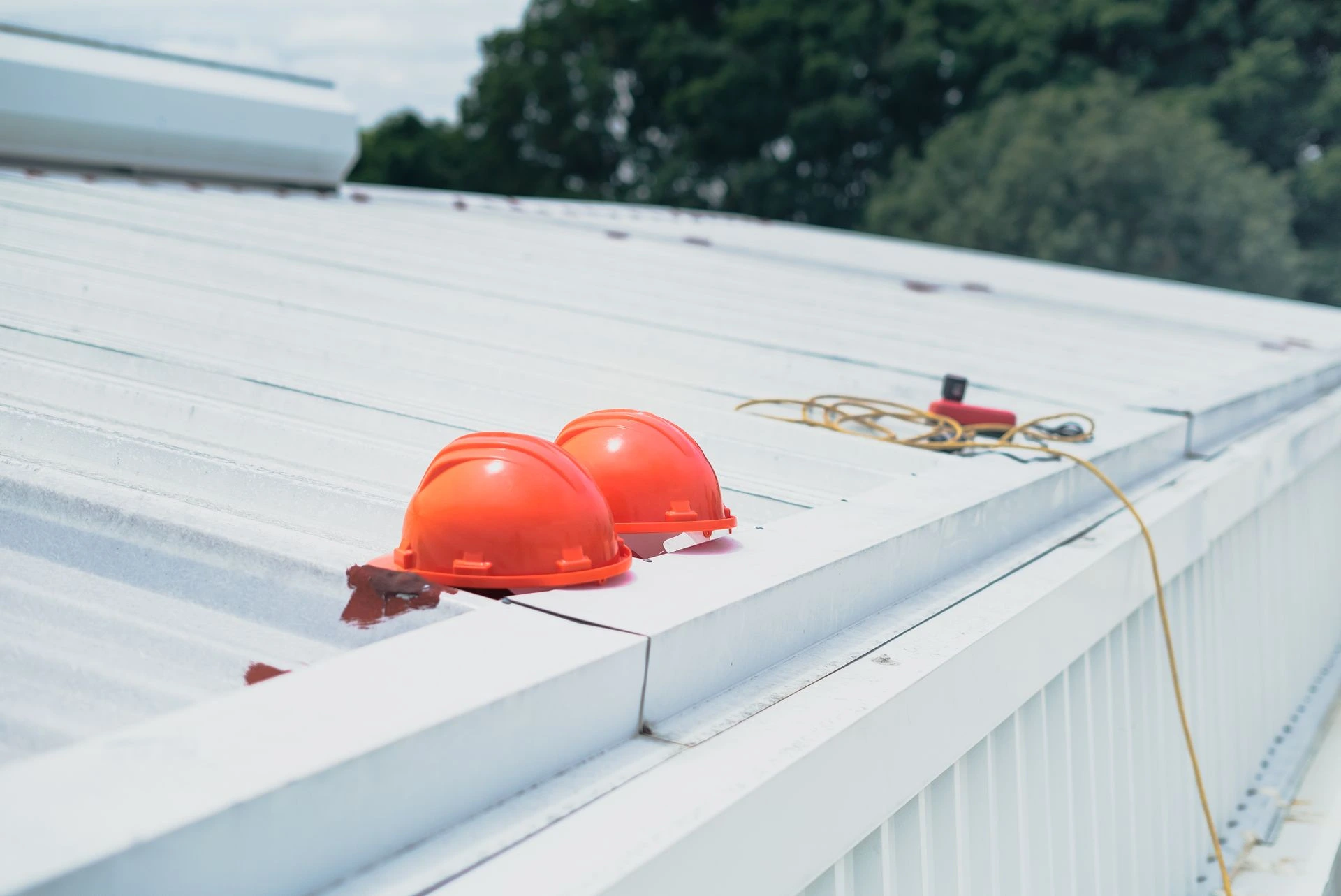
Standing-seam metal roofing next to a traditional asphalt shingle roof
Here’s what you need to know about metal roofing and insurance in Louisiana before you assume either material automatically saves you money on premiums.
Insurers don’t reward “metal” or “asphalt” as materials on their own — they reward a roof built to the IBHS FORTIFIED Roof standard, which either material can meet if it’s specified correctly. That means a sealed roof deck (self-adhered membrane or taped-seam underlayment), ring-shank nails in an enhanced pattern, and a roof covering rated to the program’s wind and impact requirements — ASTM D3161 Class F or ASTM D7158 Class H for asphalt shingles, or an equivalent-rated metal roofing system. In practice, metal roofing often clears the wind and impact bar with less additional upgrade cost, since a standing-seam system’s baseline wind resistance already sits close to or above what FORTIFIED requires — that baseline performance is what tends to make metal roofing the lower-hassle FORTIFIED path, while a standard architectural shingle usually needs to be upgraded to a Class H product specifically to qualify.
Louisiana runs one of the most active roof-hardening incentive programs in the country. The Louisiana Fortify Homes Program, administered by the Louisiana Department of Insurance, provides grants of up to $10,000 toward upgrading a roof to FORTIFIED standard, and the state funded it at $80 million for 2026 — its largest round yet, covering roughly 3,000 grants.
Louisiana Regulation 136 requires every admitted home insurer in the state to offer a premium discount — in the 20% to 30% range — on the hurricane portion of the policy for any home with a certified FORTIFIED roof, metal or asphalt. That mandate takes effect for policies issued or renewed on or after January 1, 2027, so re-roofing to FORTIFIED spec now is a real, near-term incentive regardless of which material you choose.
The Louisiana Fortify Homes Program runs through lottery-style open enrollment windows rather than first-come, first-served, and as of this writing the current round is closed with future rounds still to be announced — timing an application takes some planning rather than assuming it’s open year-round.
Asphalt shingle roof installation is a service nearly every general roofing contractor in New Orleans and Destin can perform, and most straightforward reroofs finish in a single day. That widespread availability also means faster scheduling during the post-storm rush, when contractor calendars fill up fast — a real advantage for this type of roofing project regardless of which type of roof you ultimately choose.
Metal roof installation is a narrower specialty. Standing-seam systems in particular depend on precise seam-locking and clip-spacing work that not every roofing crew is trained or equipped to do correctly, and getting that installation wrong is exactly what turns a 140+ mph-rated product into a roof that leaks or lifts well below its rating. That makes contractor selection matter more for metal than for asphalt — if you’re looking for a metal roofing contractor rather than a general roofer, ask specifically about standing-seam experience, not just general roofing experience, before hiring. GuttersTech installs both materials in-house, along with the gutters, siding, and soffit/fascia work that a new metal roof often triggers changes to, since it frequently calls for different gutter hanger spacing and drip-edge detailing than an asphalt tear-off does.
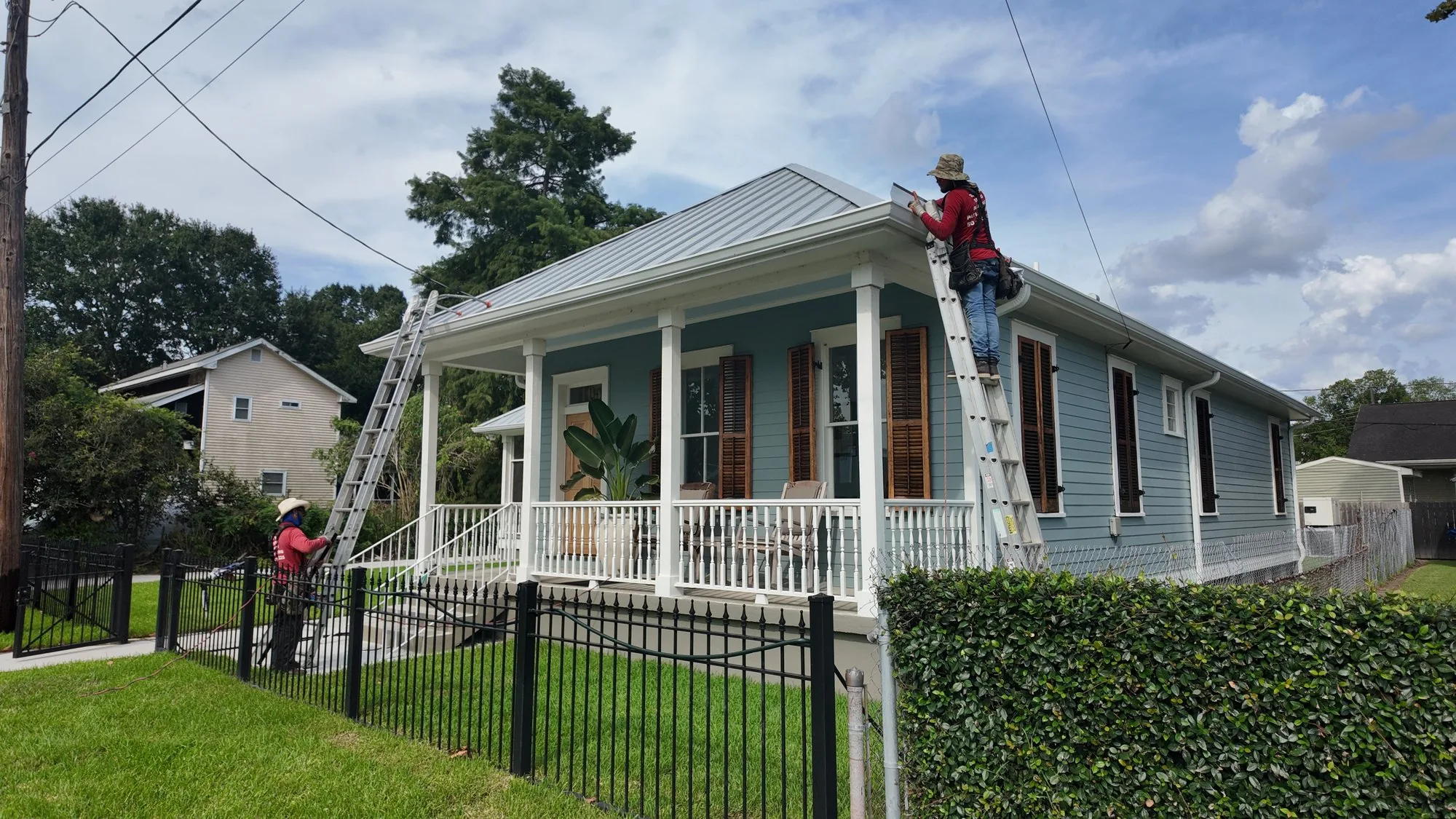
A GuttersTech crew wrapping up work on a standing-seam metal roof — the material's low-maintenance profile is a big part of the metal-vs-shingle decision.
Metal roof vs. shingles isn’t really one question — it’s several, and the answer changes depending on which factor matters most to you. Flip it around to shingles vs. metal and the framing changes too: it’s less about which material is objectively “better” and more about which one fits your specific home. Pricing these two roofs vs. each other only tells part of the story once ownership length, coastline exposure, and historic-district rules enter the picture.
Shingles are cheaper up front, shingles are easier to find a same-day repair crew for, and shingles are commonly the material a historic-district review board already has on file as approved. Asphalt is the right call if:
For homeowners staying 20 or more years, metal’s 40 to 60-plus year lifespan and lower storm-repair frequency usually offset the higher upfront cost. For shorter ownership horizons, architectural asphalt’s lower price and better resale recoup often make more financial sense.
Metal roofing lasts longer in nearly every case — commonly 40 to 60-plus years for a standing seam metal roof built from aluminum or coated steel, compared to a realistic 20 to 25 years for architectural asphalt shingles in Louisiana’s humid, storm-prone climate. Shingle roofs may last closer to the high end of that range with algae-resistant granules and diligent maintenance, but asphalt shingles perform closer to the low end without it.
Yes, if it’s built to IBHS FORTIFIED Roof specifications, a metal roof qualifies for the same 20% to 30% hurricane-premium discount mandated under Regulation 136 as a qualifying asphalt shingle roof — the discount is tied to the FORTIFIED certification, not the material itself.
Metal roofing typically costs two to four times more per square foot than asphalt shingles generally run upfront, though the gap narrows substantially over a 40-year ownership horizon once asphalt’s one or two full reroofs are factored in.
The program runs through periodic lottery-style registration windows rather than staying open continuously, and the current round is closed as of this writing, with future rounds to be announced by the Louisiana Department of Insurance.