"The cheapest shingle up front isn't always the cheapest roof over ten years."
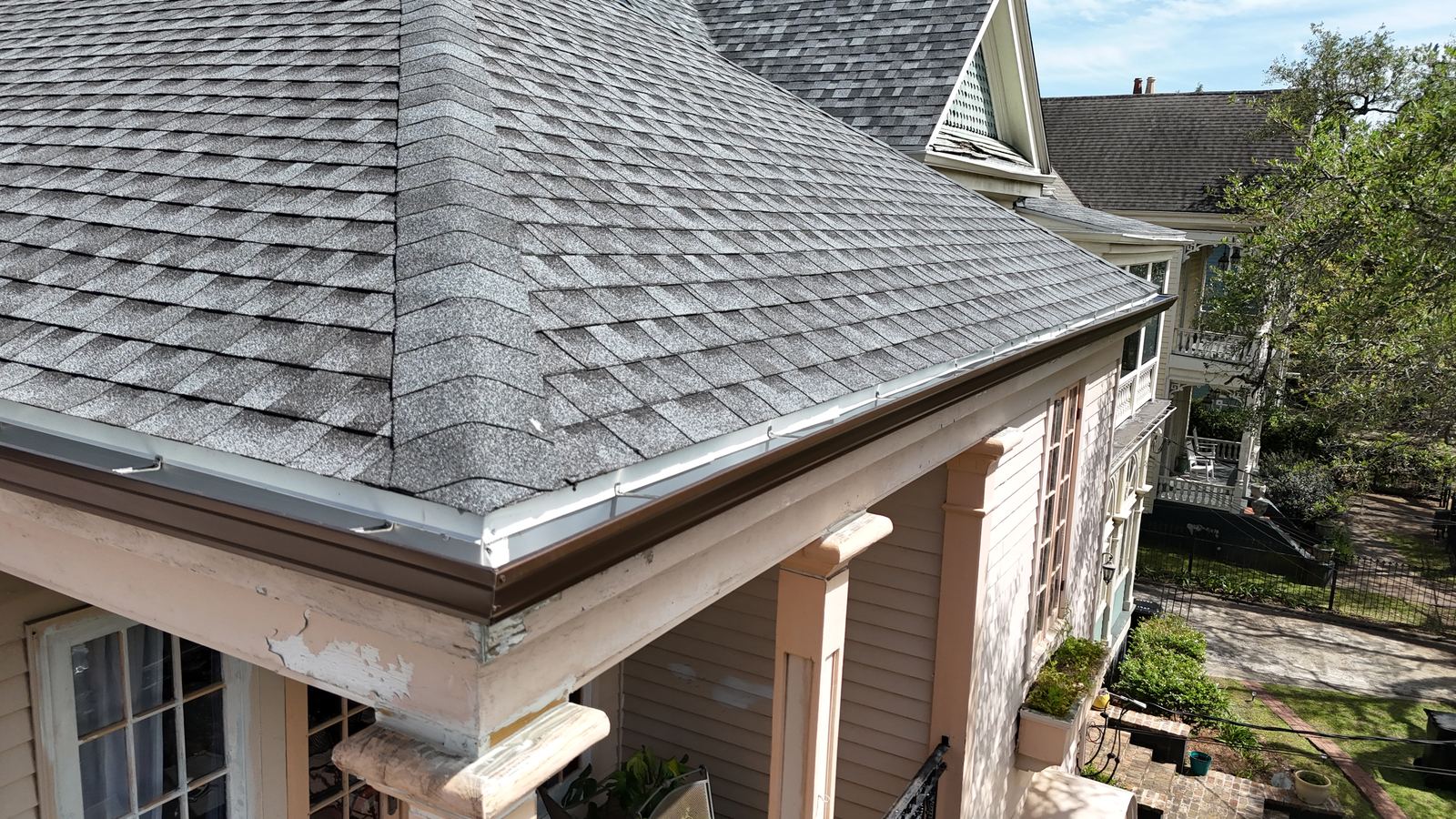
A finished shingle roof, gutter, and siding corner on a historic New Orleans area home.
$3.50–$5.50/SQ FTInstalled cost for traditional 3-tab asphalt — the low end of this list
15–50+ YRSLifespan spread across the six shingle types covered below
30% → 0%Federal solar tax credit for systems purchased outright after 12/31/2025
All prices on this page are national or regional averages, not quotes — actual cost depends on your roof's size, pitch, and condition.
Most Common
Asphalt Shingle Pros and Cons
Roughly 80% of U.S. homes carry an asphalt shingle roof, and the reason isn't mysterious: asphalt shingles are one of the cheapest roofing materials to buy, the fastest to install, and the easiest to repair one section at a time compared to other roofing materials — often a fraction of the cost of metal, rubber, or cedar. Shingles are made from a fiberglass mat coated in asphalt, a petroleum byproduct, which is exactly what keeps them light and inexpensive. That dominance doesn't mean every benefit of shingle roofing runs through asphalt, though — cedar, aluminum, rubber, and solar shingles each bring their own strengths, and asphalt has real limits in a hot, humid, storm-exposed climate.
Advantages of Asphalt Shingles
Cost is the headline advantage. Traditional 3-tab asphalt shingles are inexpensive to buy — roughly $3.50 to $5.50 per square foot installed — and that keeps the overall cost of a shingle roof lower than almost any alternative, even for premium designer lines. Installing asphalt shingles is fast, too — a straightforward reroof on an average home can be finished in a single day, since the material is light, cuts easily, fits a wide range of roof shapes, and needs no specialty tools.
There are three main types of asphalt shingles, and each type of asphalt trades price for lifespan differently:
- 3-tab (three-tab) shingles are the flattest, least expensive option, though manufacturers are phasing them out in favor of dimensional products.
- Dimensional (architectural, or laminate) shingles are layered for a thicker, textured profile, carry a higher wind rating than 3-tab, and are now the most common asphalt shingle installed — architectural shingles cost more than 3-tab, but rarely by enough to change the decision.
- Luxury (designer) shingles are built to mimic slate shingles or heavy wood shake and cost close to double an architectural shingle. That does increase the cost, but it comes with a longer expected lifespan to match.
Easiest Material on This List to RepairIndividual shingles damaged by wind or a falling branch can usually be swapped without touching the entire roof, and matching new asphalt roof shingles to old shingles that have sun-faded is easier than with most other materials, even if it's rarely a perfect match. Most product lines also carry a Class A fire rating on their own, without needing a special roof underlayment system to get there, which isn't true of every material on this list.
Disadvantages of Asphalt Shingles
Lifespan is the tradeoff for that low upfront cost. 3-tab shingles typically last 15 to 20 years, architectural shingles 25 to 30, and luxury shingles up to 30 to 50 years with a matching warranty — a shorter lifespan than metal, slate, or a properly maintained rubber roof in every case. If a longer-lasting roof matters more to you than upfront savings, that gap is worth weighing before you buy.
Check This Before You BuyWind uplift is the failure mode that matters most here. Cheaper asphalt shingles can curl, tear, or detach outright in sustained high winds, and once a shingle lifts, wind-driven rain gets underneath it fast. That's a bigger deal in Orleans Parish, where code minimums run well above what a standard national-grade shingle is rated for, and along the Destin coast, where the Florida Building Code's high-velocity hurricane zone rules apply. Not every shingle line sold nationally meets either bar — check the wind rating on the specific product, not just the brand name.
Humidity brings its own problem that most buying guides treat as a minor footnote: algae and moss growth on shingles that stay shaded or damp. In a climate where the air rarely fully dries out for months at a time, that's not a seasonal concern you address once a year — it's closer to a year-round maintenance line item, and it's worth asking specifically about algae-resistant granules rather than assuming standard shingles include them. Asphalt also isn't a strong insulator on its own, so cooling costs run a bit higher than with reflective metal, though cool-roof-rated shingle lines close some of that gap.
| Asphalt Shingle Pros | Asphalt Shingle Cons |
|---|
| Lowest upfront material and labor cost of any shingle type | Shortest lifespan on this list — 15 to 30 years depending on grade |
| Fastest install, often one day for a standard reroof | Vulnerable to wind uplift unless the product is rated for your wind zone |
| Three sub-types (3-tab, dimensional, luxury) cover a wide budget range | Prone to algae and moss growth in year-round humid climates |
| Easy, low-cost spot repairs and color-matching | Weak natural insulation value compared to metal or cedar |
| Most lines carry an independent Class A fire rating | Requires checking the specific product's wind rating against Orleans Parish or HVHZ code — not every line clears it |
If you're not sure whether a specific shingle line actually clears your parish's wind-code minimum or Destin's HVHZ requirements, that's worth checking before you buy rather than after a storm. GuttersTech can pull the manufacturer's wind rating against your address during a free roof inspection.
Quick Comparison
Metal Roof vs. Shingles: The Short Version
Installing a metal roof costs more upfront than standard shingle installation — often two to four times what asphalt runs per square foot, depending on the type of metal — but metal roofing materials typically last 40 to 80 years and carry a meaningfully higher wind rating, which matters in hurricane-exposed markets. Metal and asphalt trade advantages: asphalt wins on initial cost and repair simplicity, while metal wins on total cost of ownership if you're staying in the home long-term. For the full comparison of metal versus asphalt, including how each material handles Louisiana's humidity and Destin's salt air, see Metal vs. Shingle Roof: Which Should You Choose in Louisiana?
Coastal Pick
Aluminum Shingle Pros and Cons
Aluminum shingles are one of the more common metal shingles on the market — stamped metal panels designed to mimic slate, shake, or tile — and they solve a problem asphalt can't: they don't rust. Steel roofing can corrode over time even with a protective coating, but aluminum forms its own oxide layer and holds up on Emerald Coast homes exposed to salt air in a way that most other metals don't match. That corrosion resistance, combined with a lightweight panel and strong heat reflectivity, is why aluminum shows up disproportionately often on coastal reroofs.
The tradeoffs are cost and impact resistance. Aluminum runs meaningfully more expensive than steel shingles per square foot, and being lightweight cuts both ways — it's easier to install but dents more readily under hailstones than a heavier steel or standing-seam panel. Rain noise is the other common complaint, though a solid deck and proper underlayment cut that down considerably compared to an aluminum panel installed over open framing. Installers also have to handle aluminum panels carefully during setup, since mishandling can leave visible waviness in the finished surface that's much harder to hide than a dented asphalt shingle. Expect 30 to 50-plus years of service life from a properly installed aluminum shingle roof, which puts it well ahead of asphalt on longevity even before factoring in the reduced repaint and repair cycle.
| Aluminum Shingle Pros | Aluminum Shingle Cons |
|---|
| Naturally corrosion- and rust-resistant — a strong fit for salt air | Costs meaningfully more than steel shingles per square foot |
| Reflects heat, which helps lower cooling costs | Dents more easily than steel or standing-seam under hail impact |
| Lightweight, which simplifies installation | Rain noise unless installed over a solid deck with proper underlayment |
| 30 to 50-plus years of expected service life | Mishandling during install can leave visible waviness in the panel |
Storm Impact
Rubber Roofing Shingle Pros and Cons
Rubber roofing shingles — sometimes sold as synthetic slate or synthetic shake — are typically made from recycled rubber, often reclaimed tire material, molded to look like natural slate or cedar. Several product lines carry Class 4 impact resistance, the top hail rating available, and wind ratings up to 110 mph, which makes them a genuine option for storm-prone regions once you look past the higher sticker price. Most lines run 40 to 50 years of expected service life, with some premium products claiming longer under ideal conditions — treat the high end of any manufacturer's lifespan claim as the best case, not the average.
Flexibility is the material's biggest asset and its main weak point at once. Rubber shingles handle roof movement and freeze-thaw cycling better than a rigid material, but sustained temperature swings can also cause the panels to expand and contract enough to open up seams over time, which is worth asking an installer about directly if you're in a market with big day-to-night temperature shifts. Installation costs run higher than asphalt, and rubber roofing depends on correct installation to avoid ponding water in low-slope sections or valleys — get this from a contractor who's installed the specific product before, not just metal or asphalt. Ongoing maintenance compared to other roofing types is generally light once it's installed correctly, which helps offset that higher upfront cost over time.
| Rubber Shingle Pros | Rubber Shingle Cons |
|---|
| Class 4 impact resistance available — the top hail rating | Higher installation cost than asphalt |
| Wind ratings up to 110 mph on many product lines | Seams can open up under sustained temperature swings |
| 40 to 50-plus years of expected service life | Needs correct installation to avoid ponding in valleys or low-slope areas |
| Made from recycled material, often reclaimed tire rubber | Fewer installers have hands-on experience with the specific product |
| Handles roof movement and freeze-thaw cycling well | Manufacturer lifespan claims should be treated as a best case, not an average |
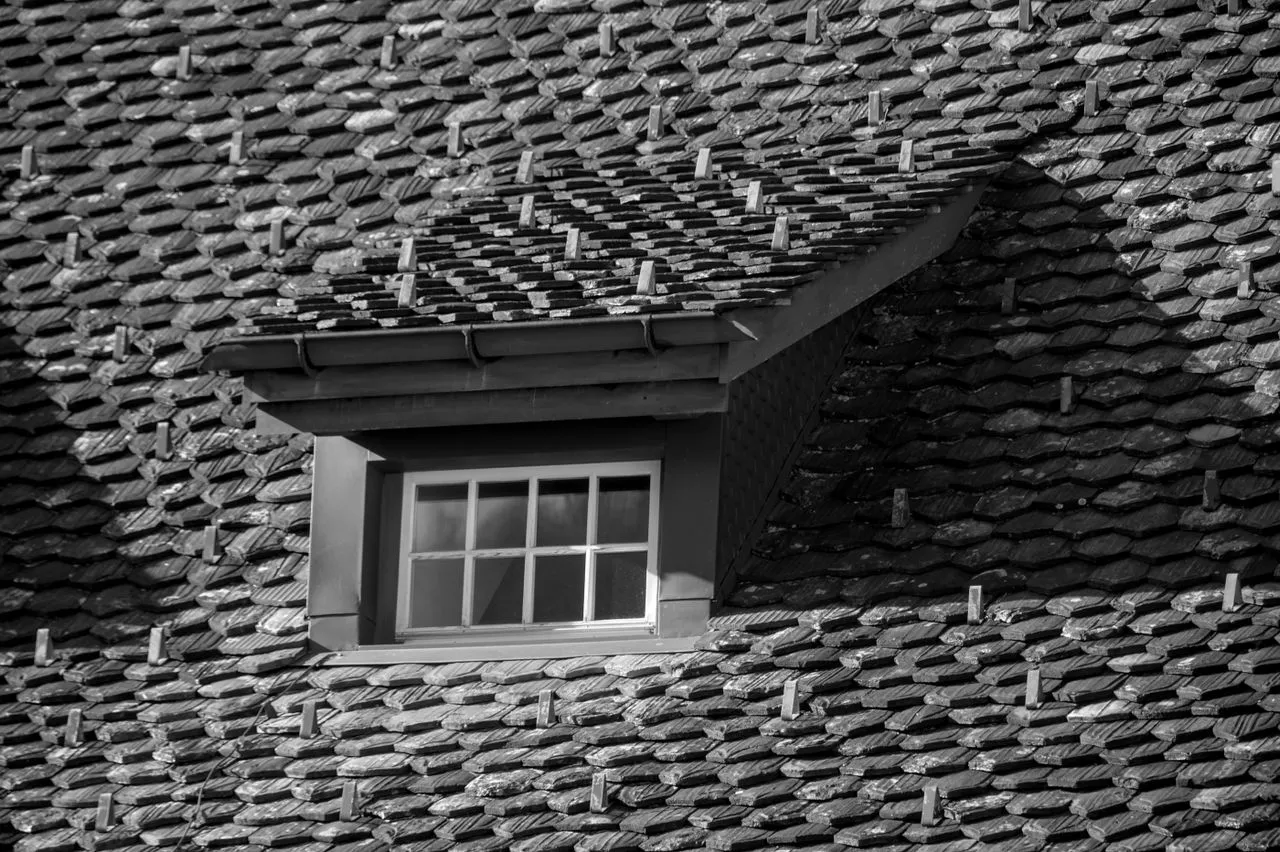
Rubber (synthetic slate) shingle roofing
The Fine Print
Fiberglass Shingle Pros and Cons
Here's where a lot of roofing content gets sloppy: "fiberglass shingles" aren't a separate roofing material sitting alongside asphalt — they're the modern standard construction method for asphalt shingles themselves. The distinction is the mat underneath the asphalt coating. Older organic-mat shingles use a paper base soaked in roughly 40% more asphalt, making them heavier and more resistant to cracking in genuinely cold climates. Fiberglass-mat shingles use a glass-fiber base that needs less asphalt to hold together, which makes the finished shingle lighter, more dimensionally stable, and more fire-resistant — organic-mat products have largely disappeared from the market as a result.
Practically, if you're comparing "asphalt" against "fiberglass" shingles for a New Orleans or Destin roof, you're almost certainly looking at the same material family. Nearly every asphalt shingle sold today, from basic 3-tab to luxury designer lines, is fiberglass-mat construction. The advantages carry over directly from the asphalt section above — lower cost, easier installation, wide style range — along with the same wind-uplift and algae considerations. The one added benefit worth naming: fiberglass mat shingles typically test out at a stronger fire rating than their old organic-mat predecessors did, for whatever that's worth in a region where wind and water, not wildfire, are the primary roofing risk.
| Fiberglass-Mat Shingle Pros | Fiberglass-Mat Shingle Cons |
|---|
| Lighter than older organic-mat asphalt shingles | Not a genuinely separate material — same cost, same underlying asphalt |
| More dimensionally stable (less prone to warping) | Shares standard asphalt's wind-uplift vulnerability |
| Stronger fire rating than organic-mat predecessors | Shares standard asphalt's algae and humidity vulnerability |
| Needs roughly 40% less asphalt to build the same shingle | Slightly less flexible than heavier organic-mat in genuinely cold climates (not a Gulf Coast factor) |
Classic Look
Cedar Shingle Pros and Cons
Cedar is the classic choice among wood shingles — it's what people picture when they want a roof with real texture and warmth. Sawn cedar shingles have a smoother, more uniform face, while split cedar shakes are thicker and rougher, with a more rustic shadow line. Western red cedar carries natural oils that resist rot and insects better than most softwoods, it's biodegradable at the end of its service life, and it insulates an attic noticeably better than asphalt.
The disadvantages matter more here than they do in a drier climate. Untreated cedar carries only a Class C fire rating on its own — it can reach Class A, but only as part of a full assembly using fire-retardant-treated shingles plus a fire-resistant cap sheet underlayment, never as an untreated shingle by itself. Expect 20 to 30 years of service life under normal conditions, and lean toward the shorter end of that range in a climate that stays wet and humid for most of the year rather than the drier Pacific Northwest conditions cedar performs best in. Maintenance is a real ongoing commitment — periodic oiling or treatment to prevent splitting and moss growth — and New Orleans' Formosan termite pressure is aggressive enough that natural rot resistance shouldn't be treated as termite-proofing. Cedar also costs more to install and repair than asphalt, and full reroofs are a specialty job, not a weekend one. It's a real option for a specific look, but it's worth going in with the maintenance commitment clearly understood rather than assuming "natural" means low-upkeep.
| Cedar Shingle Pros | Cedar Shingle Cons |
|---|
| Distinct natural texture and curb appeal | Only Class C fire-rated alone — Class A requires a treated assembly |
| Natural oils resist rot and insects better than most softwoods | Shorter real-world lifespan in humid climates, 20 to 30 years |
| Insulates an attic better than asphalt | Doesn't stop Formosan termite pressure on the decking underneath |
| Biodegradable at end of service life | Requires ongoing oiling or treatment to prevent splitting and moss |
| | Higher installation and repair cost; reroofs are a specialty job |
Energy Generation
Solar Shingle Pros and Cons
Solar shingles — building-integrated photovoltaic products that generate electricity as part of the roofing surface itself, rather than sitting on top of a separate roof as panels do — solve the aesthetic complaint a lot of homeowners have about traditional rooftop solar. They look like a roof, not equipment bolted to one, which matters in historic districts and HOA communities where a rack-mounted panel array can draw pushback that an integrated shingle roof doesn't.
The economics changed meaningfully at the end of 2025. The federal residential solar tax credit — the 30% credit under Internal Revenue Code Section 25D — expired for systems placed in service after December 31, 2025, under the One Big Beautiful Bill Act signed into law in mid-2025. A homeowner purchasing a solar shingle roof outright in 2026 should not expect that federal credit to apply. Some lease and power-purchase-agreement arrangements can still route a comparable credit through the financing company under a separate commercial provision, and certain state-level incentive programs remain active, but the rules here shift often enough that it's worth confirming current numbers with a tax professional and your installer before budgeting around any specific figure. Upfront cost for solar shingles also still runs higher than a traditional shingle roof plus a separate panel array in most cases, even before the tax-credit question.
Where solar shingles earn their keep is long-term energy offset and durability — most integrated products are built to handle the same wind and impact loads as a standard architectural shingle, and manufacturers back them with multi-decade warranties on both the roofing and the electrical components. It's a real option for a homeowner planning to stay in the house long enough to recoup the investment through utility savings, less so as a quick-flip renovation choice.
| Solar Shingle Pros | Solar Shingle Cons |
|---|
| Generates electricity as part of the roof surface, not equipment on top of it | No federal tax credit for systems purchased outright after 12/31/2025 |
| Blends in better than rack-mounted panels — fewer historic-district or HOA objections | Higher upfront cost than asphalt plus a separate panel array in most cases |
| Rated for the same wind and impact loads as a standard architectural shingle | Fewer installers are certified for the specific product |
| Multi-decade warranties on both roofing and electrical components | Long payback period — needs long-term ownership to make financial sense |
The Verdict
Is Shingle Roofing Right for Your Home?
Choosing the right roofing material comes down to two questions: how long you plan to stay in the home, and what kind of roof care you're willing to commit to. For most New Orleans and Destin homeowners, some form of shingle roofing is the right call — the specific type is what actually matters. Architectural asphalt hits the best balance of cost and durability for a straightforward reroof, provided the specific product carries a wind rating that actually clears Orleans Parish or HVHZ code minimums — that detail gets missed more often than it should. Aluminum earns its higher price tag on a coastal Destin property where salt air chews through less corrosion-resistant materials. Rubber roofing is worth pricing out if hail and storm-impact resistance matter more to you than upfront cost. Cedar is a legitimate aesthetic choice, but go in clear-eyed about the maintenance schedule and the added termite consideration this region carries that a Pacific Northwest buying guide won't mention. Solar shingles make the most sense for a long-term homeowner running the numbers without today's federal credit factored in.
One thing worth flagging regardless of material: French Quarter, Garden District, and Tremé properties often fall under historic-district review that restricts shingle color and profile beyond what code alone requires, so it's worth checking that before you fall in love with a specific product line. New Orleans' Formosan termite pressure is also worth a mention no matter which shingle you choose, since it's the decking and framing under the shingles — not the shingles themselves — that termites actually target, and a roofing contractor who knows to check for that during tear-off catches problems a quick visual inspection misses.
Because a shingle roof interacts directly with gutters, fascia, and soffit ventilation — a wind-lifted shingle edge, for instance, often shows up first as water intrusion at the fascia board, not as a visibly missing shingle — it's worth having a contractor look at the whole exterior system rather than the roof in isolation. GuttersTech handles roofing, gutters, siding, and soffit/fascia under one crew, which is the difference between coordinating three separate inspections and scheduling one. If you're ready to make an informed decision for your specific roof, request a free roof evaluation and we'll walk through which shingle type — and which roofing material overall — actually fits your home, your budget, and your street.
FAQ
How long does a shingle roof actually last in New Orleans or Destin?
Standard 3-tab asphalt runs 15 to 20 years, architectural asphalt 25 to 30, and premium or alternative materials like aluminum and rubber often 40 years or more. Gulf Coast humidity and storm exposure tend to push real-world lifespan toward the shorter end of any manufacturer's stated range.
Which shingle type holds up best in hurricane-prone areas?
Aluminum and rubber shingles generally carry higher wind and impact ratings than standard asphalt, and metal roofing outperforms both on wind resistance overall. Within asphalt, dimensional and impact-resistant product lines rated for your specific wind zone perform far better than basic 3-tab shingles.
Do solar shingles still qualify for a tax credit in 2026?
The federal residential solar tax credit expired for systems purchased outright after December 31, 2025. Some lease or power-purchase financing structures and select state programs may still offer incentives, so confirm current terms with a tax professional before budgeting around a specific credit amount.
Can you mix shingle types on the same roof?
Yes, though it's uncommon outside of accent areas like a porch roof or dormer, since mixing structural loads and installation methods adds complexity. Most contractors recommend one primary material for the main roof plane and reserve a second material for a clearly separated architectural feature.
Are fiberglass shingles better than regular asphalt shingles?
They're not a different material — nearly all modern asphalt shingles use a fiberglass mat rather than the older paper-based organic mat. Fiberglass-mat construction is lighter, more fire-resistant, and more dimensionally stable, which is why it replaced organic-mat shingles industry-wide.
Ready to Pick the Right Shingle for Your Roof?
GuttersTech will walk your specific roof and tell you which shingle type actually fits your budget, your street, and your local wind code — not just sell you the cheapest option.