Gutters / New Orleans
What Are Gutter Guards and Do You Really Need Them in New Orleans?
What gutter guards actually are, how each type performs, what they won't do no matter what a salesperson promises, and what New Orleans' live oaks, humidity, and hurricane season specifically demand from one.
A gutter guard is a cover installed over an existing gutter system to block leaves, twigs, and other debris while still letting rainwater flow through into the gutter and down the downspout. That's the short answer. Whether one is actually worth installing on a New Orleans home is a longer conversation, and it depends more on your specific trees, your roof, and your tolerance for ladder time than any generic "yes, everyone needs them" answer would suggest.
This guide covers what gutter guards are, how the different types actually perform, what they won't do no matter what a salesperson promises, and — the part most national guides skip — what New Orleans' live oaks, humidity, and hurricane-season rainfall specifically demand from a guard system. Think of it as the pros and cons of every major gutter cover option, filtered through what actually happens on a Gulf South roof rather than a generic home improvement checklist.
How They Work
What Are Gutter Guards and How Do They Work?
Before comparing types, it helps to understand the actual problem a gutter guard is trying to solve and how it solves it.
The Problem Gutter Guards Solve
An open gutter system collects whatever falls on the roof above it. Leaves, twigs, pine needles, granules shed from an aging shingle roof, and seed pods all wash down into the gutter every time it rains, and none of that debris washes itself back out.
Over weeks and months, that debris builds up and compacts, especially after a few rain-and-dry cycles pack it down. Eventually it blocks the water's path to the downspout entirely, and that's when clogged gutters stop doing their one job.
How Clogged Gutters Damage Your Home
A blocked gutter doesn't fail quietly. Water backs up, spills over the front edge, and runs straight down the siding or foundation instead of through the downspout where it belongs.
Over time, that overflow saturates the fascia board behind the gutter, and constant moisture there leads to wood rot, paint failure, and eventually a gutter that pulls away from the roofline because the wood it's screwed into can no longer hold a fastener. Overflow at the foundation level is its own separate problem, since repeated saturation right next to the house undermines soil stability and can contribute to basement or crawl space moisture issues over time. None of this damage to your home happens overnight, which is exactly why a slow gutter clog is so easy to ignore until the repair bill shows up.
How Gutter Guards Keep Water Flowing
A gutter guard sits over the top of the gutter and is designed to block debris from entering the gutter channel while still letting water flow through into it — engineered specifically to allow water to flow past whatever it's blocking. Different designs rely on different mechanics to pull that off — some use fine mesh to filter debris the way a screen door filters bugs, others use the physics of surface tension to guide a sheet of water around a curved nose while debris drops off the front edge.
Whatever the mechanism, the goal is the same: keep the gutter channel itself clear so water reaches the downspout instead of pooling and overflowing. A well-fitted cover blocks debris while allowing water into the gutter at close to the same rate as an uncovered channel, which is the whole engineering challenge every gutter guard design is really trying to solve.
What Gutter Guards Are Made Of
Gutter guards come in a range of materials, and the material affects both durability and price about as much as the type of gutter guard itself does.
Aluminum and Stainless Steel
Aluminum and stainless steel are the two metal options, and both hold up well to New Orleans humidity without rusting the way raw steel would. Aluminum is lighter and less expensive; stainless steel micro-mesh tends to hold its shape longer under the weight of debris and is the material most premium mesh systems use for the actual screen surface.
Plastic, PVC, and Foam
Plastic and PVC gutter guards cost less upfront and resist corrosion entirely, since there's no metal to corrode, but they're more prone to becoming brittle and cracking under prolonged UV exposure — a real consideration under direct Louisiana sun. Foam inserts are a different category entirely: a porous foam strip that sits inside the gutter itself rather than covering the top, letting water soak through while blocking larger debris.
Types Compared
Types of Gutter Guards Compared
Four basic gutter guard designs cover almost everything on the market, and each one makes a different tradeoff between cost, performance, and maintenance. Understanding the different types of gutter guards before buying is the single best way to avoid paying for more protection than a given roofline actually needs, or too little for a property with heavy tree cover.
Screen Guards
Screen guards, sometimes called gutter screens, are a flat or slightly arched panel of metal or plastic mesh with holes large enough to let water through but small enough to catch bigger leaves and twigs. These screen gutter guards are usually the least expensive of the metal gutter guards on the market and one of the easier types to install yourself.
How They Perform and Their Limits
Screen guards do a reasonable job with large leaves and debris but let smaller particles like pine needles and roof grit through fairly easily, since the mesh openings are larger than what a micro-mesh or reverse-curve system uses. They also tend to sag or bow over time under the weight of accumulated debris sitting on top, which is worth knowing going in rather than discovering after a few seasons.
Mesh and Micro-Mesh Guards
Mesh gutter guards use a finer weave than a basic screen guard, and micro-mesh takes that a step further with an extremely tight weave — often fine enough to block small debris and even some grit while still allowing water through.
Why Micro-Mesh Is the Top Choice for Heavy Tree Cover
Micro-mesh guards are generally considered the top choice for a property with heavy tree cover, since they're the design most capable of blocking the fine debris — small leaflets, seed pods, pine needles — that a wider screen guard simply lets pass through. That performance comes at a real cost premium, with professionally installed micro-mesh typically running $8 to $12 per linear foot versus $3 to $12 for a basic screen guard.
Reverse Curve (Surface Tension) Guards
A reverse curve guard, sometimes sold under brand names like Gutter Helmet, works on an entirely different principle: rain flows over a curved nose and clings to the surface via surface tension, following the curve down into a narrow slot while leaves and larger debris shoot past the edge and fall to the ground.
How They Handle Large Debris and Heavy Rain
Reverse curve guards handle large debris exceptionally well, since leaves never even reach the slot opening in the first place. Heavy rain is where the design gets tested, though — during a genuine downpour, the water sheet can move too fast for surface tension to hold it against the curve, and some of it shoots straight off the edge along with the debris instead of following the curve into the gutter. That's a real limitation for a hurricane-prone market like New Orleans, addressed in more detail further down.
Foam and Brush Guards
Foam and brush guards are the two lowest-cost gutter guard styles, and both work by physically filling the gutter's open top rather than covering it with a rigid panel. A brush guard looks like a giant bottle-brush laid into the gutter channel; foam inserts are a solid porous strip cut to fit the gutter's width.
Why These Cost Less but Need More Upkeep
Foam and brush guards run as little as $1 to $8 per linear foot in material cost, making them the cheapest way to add any gutter protection at all. The tradeoff is that fine debris and seeds settle into the foam or the brush bristles themselves over time, and unlike a guard that debris slides off of, these styles need to be pulled out and cleaned or replaced periodically rather than just rinsed off from above.
Screen Guards
Least expensive, easiest DIY install. Lets fine debris like pine needles through; can sag under debris weight over time.
Mesh / Micro-Mesh
Top choice for heavy tree cover. Blocks fine debris other guards miss, at $8–$12/ft professionally installed.
Reverse Curve
Excellent against large debris via surface tension. Can shed water past the gutter during the heaviest downpours.
Foam & Brush
Cheapest option at $1–$8/ft materials. Needs periodic pull-out cleaning rather than a simple rinse.
| Guard Type | Cost (per linear ft.) | Best For | Main Weakness |
|---|
| Screen guards | $3–$12 | Budget, large leaves | Fine debris passes through |
| Mesh / micro-mesh | $8–$12 | Heavy tree cover | Highest upfront cost |
| Reverse curve | $15–$30+ | Large debris, low maintenance | Can shed water in extreme downpours |
| Foam & brush | $1–$8 | Lowest cost entry point | Needs periodic pull-out cleaning |
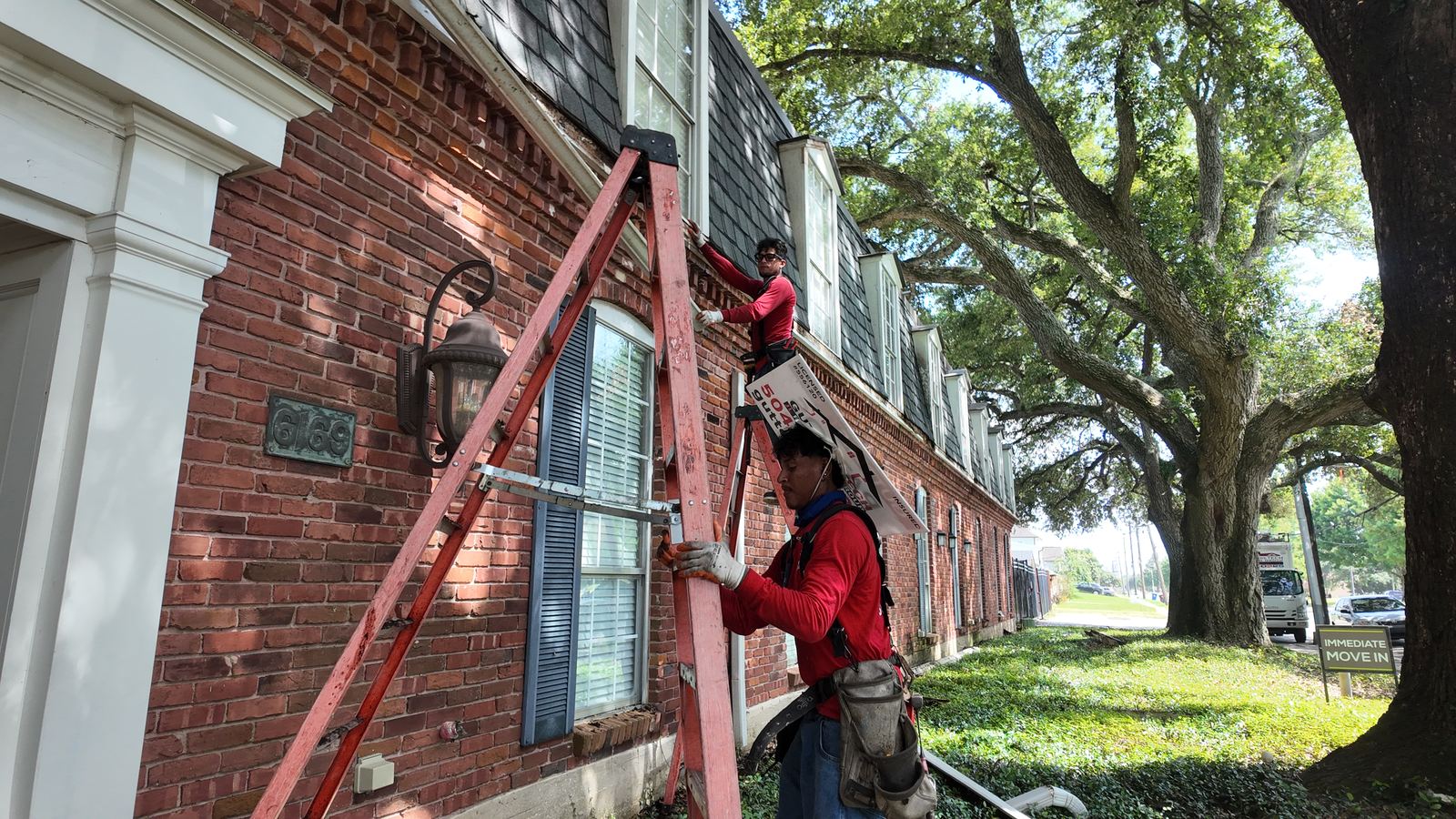
Micro-mesh is generally the top choice for a property with heavy live oak or magnolia cover.
Benefits
Benefits of Installing Gutter Guards
Whichever type a homeowner picks, the core benefits of a properly matched gutter guard system are largely the same.
Reduced Gutter Cleaning and Ladder Time
This is the benefit most homeowners actually care about: a good gutter guard system can dramatically cut how often gutters need manual cleaning, which means less time on a ladder and less money spent on professional gutter cleaning visits over the life of the gutter system. Fewer cleanings a year translates directly into lower gutter cleaning costs over time, and for a lot of homeowners, a guard system that can save you time on a recurring chore is worth the upfront cost on its own.
Preventing Overflow, Foundation, and Siding Damage
By keeping the gutter channel clear, a gutter guard reduces the overflow events that damage fascia, siding, and — over enough repeated exposure — the soil and drainage right next to the foundation. This is the benefit with the clearest dollar value attached, since fascia and siding repair from years of water damage typically costs far more than the guards themselves. In short, a properly matched guard system helps protect your home from water damage in exactly the spots that are most expensive to repair once they've been neglected for a few seasons.
Discouraging Pests, Nests, and Standing Water
A clogged gutter holding standing water is exactly the kind of micro-environment mosquitoes need to breed — as little as a quarter-inch of standing water is enough, and a single clogged section can produce a meaningful mosquito population within a season. Standing debris also attracts birds and rodents looking for nesting material, and the moisture it holds against the fascia is a documented contributor to wood rot that in turn draws termites and carpenter ants. A gutter guard doesn't eliminate every pest risk around a home, but removing standing water and rotting organic debris from the equation removes one of the more reliable habitats pests rely on.
Extending the Lifespan of Your Gutter System
Debris sitting in a gutter for months at a time holds moisture against the metal, which accelerates corrosion in aluminum gutters and rust in any exposed steel fasteners. A gutter guard that keeps the channel largely debris-free also keeps it largely dry between rain events, which meaningfully extends how long the gutters themselves last before needing replacement.
The Honest Version
What Gutter Guards Won't Do (Common Drawbacks)
Gutter guards solve a real problem, but plenty of marketing overstates what they actually deliver. Here's the honest version.
They Are Not Maintenance-Free
No gutter guard on the market is truly "clean it once and forget it forever." Every type still needs periodic inspection, and most need at least an occasional rinse or brush-off to clear fine grit, pollen, or seeds that settle on the surface even when larger debris is kept out.
Fine Debris Can Still Get Through
Even the tightest micro-mesh can't stop everything. Very fine grit, certain seed pods, and pine needles at the right angle can still work their way through or accumulate on top of a mesh surface, and a screen or reverse-curve guard lets considerably more fine material through than micro-mesh does.
Overflow Risk During Heavy Downpours
This is the drawback that matters most for a hurricane-prone climate: during an especially intense downpour, some guard designs — reverse curve systems in particular — can shed water over the edge rather than channeling all of it into the gutter, because the volume and speed of the water overwhelm the surface-tension effect the design depends on. A gutter guard rated for typical regional rain doesn't automatically perform the same way during a tropical downpour dropping several inches in an hour.
Upfront Cost and Installation Considerations
Premium gutter guard systems, especially professionally installed reverse-curve and micro-mesh options, cost a real amount upfront — often more than a homeowner expects before getting a quote. Installation also matters as much as the product itself: a guard installed at the wrong pitch or without properly accounting for the existing gutter's slope can underperform regardless of how good the guard itself is.
Overflow RiskReverse-curve guards can shed water past the gutter entirely during a genuine downpour, when surface tension is overwhelmed by volume and speed. A guard rated for typical regional rain doesn't automatically hold up in a tropical downpour.
Homeowner Checklist
Do You Actually Need Gutter Guards? A Homeowner Checklist
Not every home needs every type of guard, and for some homes, the honest answer is that gutter covers aren't the best use of the budget yet.
Signs Your Home Is a Good Candidate
A property with mature trees close to or overhanging the roofline, a two-story home where gutter cleaning means renting or owning tall ladder equipment, a homeowner who has already dealt with an overflow event or fascia damage, or anyone who simply wants to cut down on the twice-a-year cleaning routine are all strong candidates for installing gutter guards. If you live in an area with heavy live oak or magnolia cover, that alone is often reason enough to install gutter guards sooner rather than later.
When Gutter Guards May Not Be Worth It
A newer home with few overhanging trees, a single-story roofline that's easy and inexpensive to clean safely, or a homeowner already on a reliable professional gutter cleaning schedule that isn't causing any real problems may find that a guard system isn't worth the investment yet, at least not the premium end of the price range. In those cases, the smarter move can simply be sticking with a regular cleaning schedule until circumstances change.
Good CandidateMature overhanging trees, a two-story roofline, a past overflow event, or simply wanting off the twice-a-year cleaning routine all point toward installing guards now rather than later.
NOLA Climate
What New Orleans' Climate and Tree Canopy Demand From a Gutter Guard
Everything above applies anywhere. This section is about what actually changes once you're picking a gutter guard for a New Orleans roof specifically, rather than a generic American home.
Live Oaks, Magnolias, and Bald Cypress: A Year-Round Debris Load
Live oaks are evergreen, which sounds like it should mean less debris — but live oaks actually drop their small leaves continuously throughout the year rather than all at once in autumn, so there's rarely a season when a live-oak-shaded roof isn't shedding at least some leaf litter into the gutters. Southern magnolias add their own large, leathery leaves and thick seed pods on a rolling basis rather than a single clean-up window, and bald cypress, common along New Orleans waterways and in older neighborhoods, drops its needle-like foliage each fall in a genuine autumn debris event of its own.
Why "Leaf Season" Doesn't Apply Here
Most national gutter guard content is written around a single autumn leaf-drop event, because that's how deciduous trees behave through most of the country. New Orleans' tree canopy doesn't work that way. Between live oaks shedding year-round, magnolias dropping leaves and pods on their own schedule, and bald cypress adding a fall needle event on top of it, a New Orleans property with mature trees is dealing with debris input across most of the calendar, not one predictable autumn cleanup.
60+ Inches of Annual Rain and Hurricane Season Downpours
New Orleans receives roughly 60 to 65 inches of rain in an average year, well above the U.S. average of around 38 inches, and that rainfall isn't spread in gentle, even doses. Summer and hurricane season, which runs June through November with a peak in late August and September, bring intense, fast-moving downpours that can drop several inches in a single event.
How Heavy Rainfall Tests Reverse-Curve and Screen Guards
This is exactly the rainfall pattern that stresses reverse-curve guards the most: the surface-tension effect these guards depend on can be overwhelmed by a genuinely heavy downpour, sending some water past the gutter entirely rather than into it. Screen guards face a related but different issue during heavy rain, since a screen already partially loaded with debris has less open surface area for water to pass through right when the volume of water hitting the roof is at its highest. Micro-mesh systems and well-maintained reverse-curve systems installed at the correct pitch generally hold up best through a hurricane-season downpour, but it's a factor worth asking about directly with any installer quoting a system for this market.
Humidity, Mold, and Corrosion Risk
New Orleans' humidity doesn't just affect roofs and siding — it affects gutter guards too. Constant moisture accelerates corrosion on lower-grade metal guards and fasteners, and organic debris that does make it past a guard's surface tends to develop mold and mildew faster here than in a drier climate, which is one more reason material choice (stainless steel over lower-grade aluminum, in particular) matters more in this market than it would somewhere arid. One climate factor that genuinely doesn't apply here: an ice dam, the frozen-gutter backup common in colder states, simply isn't a realistic concern for a New Orleans roof, which at least removes one item from the list of things a local gutter guard needs to handle.
Below-Sea-Level Drainage and Flood-Prone Lots
Large portions of New Orleans sit at or below sea level and rely on an engineered pump system to move stormwater out, which means a home's own drainage matters more here than in a city where gravity alone carries water away. A gutter system that overflows during a downpour is adding water to the ground right around the foundation at exactly the moment the broader drainage system is already under the most stress.
Why Downspout Extensions and Elevated-Home Drainage Matter Here
Downspout extensions that carry water several feet away from the foundation, rather than dumping it right at the base of the house, matter more in flood-prone parts of New Orleans than almost anywhere else in the country. Homes built on piers or otherwise elevated also need drainage that accounts for the added height water has to travel before it reaches grade, and a gutter guard system that keeps water flowing freely into a well-routed downspout is a small but real piece of a home's overall flood resilience.
U.S. average rainfall~38 in.
Hurricane season spanJun–Nov
Choosing
Choosing the Right Gutter Guard for a Gulf South Home
With the local climate and tree canopy factored in, here's how that translates into an actual gutter guard recommendation and the right choice for your home.
Best Guard Types for New Orleans Tree Debris
For a property with heavy live oak, magnolia, or bald cypress cover, micro-mesh is generally the best gutter guard for New Orleans conditions specifically, since it's the design best equipped to handle both the volume and the fine texture of year-round Southern tree debris. A reverse-curve system installed by an experienced local contractor at the correct pitch is a reasonable alternative, particularly on a home without heavy overhanging tree cover, but it needs that installation quality to perform well during the region's heaviest downpours.
Matching Gutter Guards to New Orleans and Destin-Area Homes
GuttersTech serves both the New Orleans metro and the Destin/Emerald Coast market, and while both are Gulf South and hurricane-exposed, the guard selection logic isn't identical between them. New Orleans' decision is driven mostly by tree canopy and rainfall volume; a Destin property's decision leans more heavily on salt-air corrosion resistance for any metal components.
Salt Air and Coastal Corrosion Considerations for Destin/Emerald Coast Properties
A Gulf-front or near-coastal Destin home should prioritize stainless steel or aluminum guards specifically rated for coastal salt exposure, since standard-grade metal components corrode noticeably faster within the first mile or so of the coastline. This mirrors the same salt-air corrosion logic that applies to roofing material choice on the Emerald Coast — the closer to open water, the more the material spec matters relative to price.
Historic New Orleans Homes: Installing Guards Without Damaging Architectural Details
French Quarter and Garden District homes bring a separate consideration entirely: visible exterior alterations, including gutter guard systems that change the roofline's appearance, may require review from the Vieux Carré Commission or the Historic District Landmarks Commission depending on the property's location. A low-profile guard that doesn't alter the visible gutter silhouette from the street is usually the safer starting point on a historic property, and it's worth confirming with the relevant commission before installation rather than after.
New Orleans, LATree Canopy Priority
Year-round live oak and magnolia debris plus heavy hurricane-season rain point toward micro-mesh in most cases.
Destin, FLSalt-Air Priority
Coastal corrosion resistance on metal components matters more than tree debris volume this close to the Gulf.
New Orleans' tree canopy doesn't take a season off, and neither should the gutter guard chosen to handle it.
Install & Maintain
Installation, Maintenance, and Warranty Considerations
Choosing the right guard type is only half the decision — how it's installed and maintained determines whether it actually performs the way it's supposed to. Good gutter maintenance habits matter just as much after installation as good product selection did before it.
Professional Installation vs. DIY
Screen guards and foam or brush inserts are realistic DIY projects for a homeowner comfortable on a ladder. Micro-mesh and reverse-curve systems are considerably less DIY-friendly, since correct pitch and a tight seal against the existing gutter and roofline matter enormously to how well they perform, and a professional gutter guard installation typically comes with a workmanship warranty that a DIY job doesn't.
Seasonal Maintenance Checklist for Gulf Coast Homes
Even with guards installed, a seasonal check makes sense in this climate: a spring check for winter debris buildup, a pre-hurricane-season inspection to confirm guards are seated properly and downspouts are clear, and a post-storm check after any named storm to look for shifted or damaged sections. Given the region's year-round debris load, an annual professional gutter cleaning check-up is still worth scheduling even with gutter guards installed, rather than assuming the guards mean you'll never need to clean your gutters again. Treat this the same way you'd treat any other home maintenance item on a seasonal checklist, not a one-time fix.
What to Look for in a Gutter Guard Warranty
A solid gutter guard warranty should cover both the material itself and the labor if something fails due to a manufacturing or installation defect, and ideally it's transferable if the home sells. It's worth asking directly whether a warranty covers clog-related issues specifically, since some manufacturer warranties around a "no-clog guarantee" have fairly narrow conditions attached that are easy to miss in the fine print.
1
Spring Check
Confirm winter debris hasn't built up before the growing season starts.
2
Pre-Hurricane Season
Confirm guards are seated properly and downspouts are fully clear before June.
3
Post-Storm Check
Look for shifted or damaged sections after any named storm passes through.
Full Protection Plan
Pairing Gutter Guards With a Full Gutter and Exterior Protection Plan
A gutter guard is only as good as the system underneath it, and it's worth thinking about the gutters themselves before adding any guard on top. Guards alone won't keep your gutters working properly if the underlying system was never right to begin with.
Why Gutter Guards Start With the Right Gutter System
Installing a premium gutter guard on an undersized, poorly sloped, or already-failing gutter system doesn't solve the underlying problem — it just puts a nicer cover on it. Gutter size, slope, and downspout placement all need to be correct first, since even the best gutter guard for your home can't compensate for a gutter system that was never sized properly for the roof's actual water volume in the first place.
Bundling Gutter Guards With Roofing, Siding, and Soffit/Fascia Work
A gutter guard project is a natural moment to also assess the roofing, siding, and soffit and fascia it ties into, since all of these systems interact during a heavy rain event. GuttersTech can evaluate and bundle gutter guard installation with roofing, siding, and soffit/fascia work as one coordinated storm-readiness project, rather than treating the gutters as an isolated afterthought separate from everything else protecting the house.
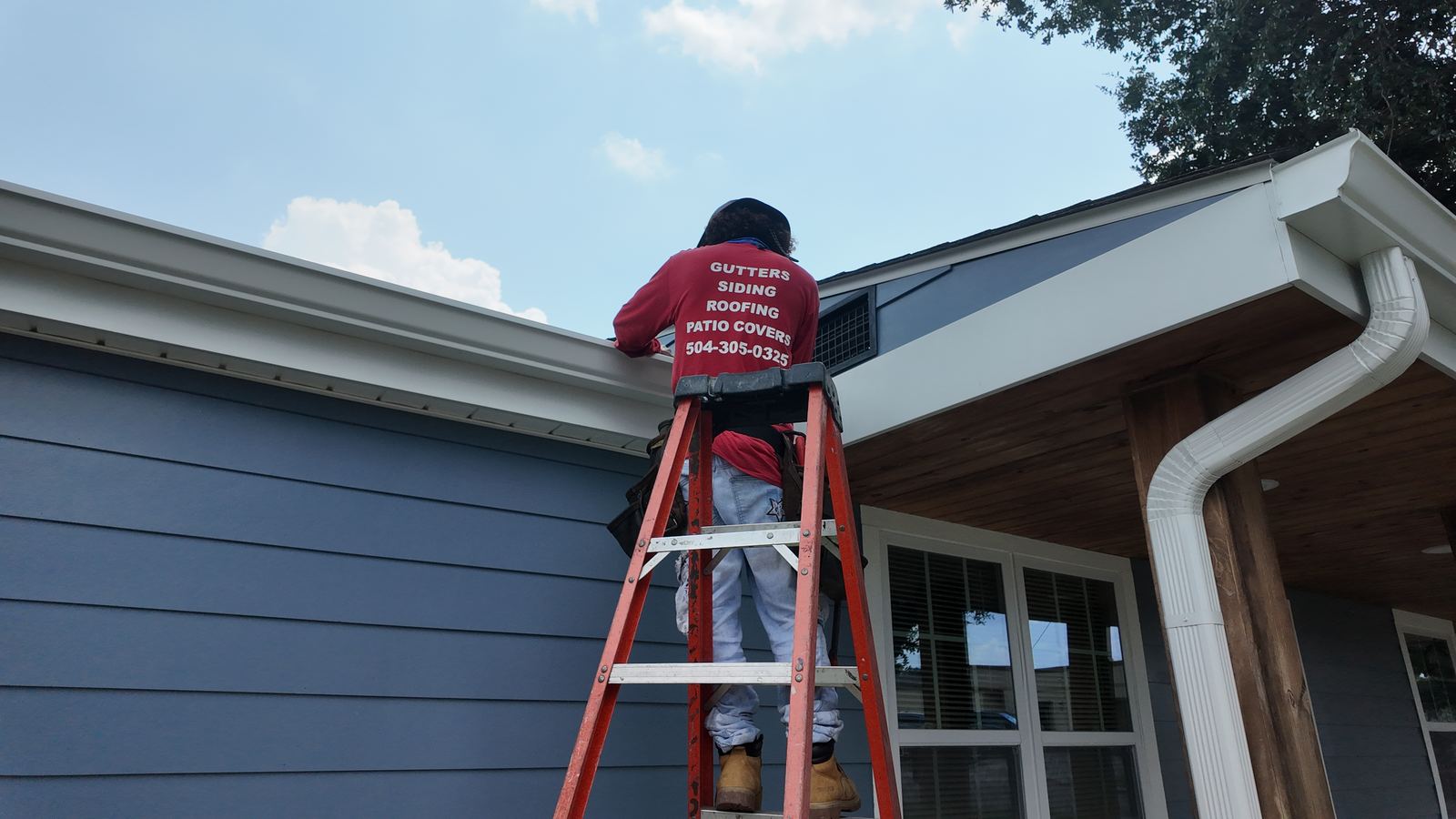
A gutter guard project is a natural moment to assess the roofing, siding, and soffit/fascia it ties into.
Frequently Asked Questions
Do gutter guards stop all types of debris?
No. Even the best micro-mesh guards can let very fine grit, certain seed pods, and pine needles through under some conditions, and every guard type still needs occasional inspection and cleaning rather than none at all.
Will gutter guards work with my home's existing gutters?
Most gutter guards can be fitted to standard K-style and half-round gutters, but a proper fit depends on the gutter's exact profile, pitch, and condition, which is why a professional assessment before installation matters more than picking a guard off a shelf.
How often do gutter guards still need to be cleaned in New Orleans?
Given the region's year-round tree debris and heavy seasonal rainfall, an annual inspection and light cleaning is a reasonable baseline even with guards installed, with an additional check recommended after hurricane season.
Are gutter guards worth the cost in a hurricane-prone area?
For most homes with meaningful tree cover, yes — the reduction in cleaning frequency and overflow-related damage typically justifies the cost over the life of the gutter system, provided the guard type and installation are matched correctly to the local rainfall intensity.
Can gutter guards help prevent pests like mosquitoes and rodents?
Yes, indirectly. By keeping standing water and decomposing debris out of the gutter channel, a guard removes one of the more reliable breeding and nesting habitats pests rely on, though it won't address every pest pathway around a home on its own.
Schedule a Gutter Guard Consultation
Whether gutter guards are worth it for your specific home comes down to your trees, your roofline, and how much ladder time you're trying to eliminate — not a one-size-fits-all national answer. GuttersTech can walk your property, look at what's actually falling on your roof, and recommend the right gutter guard for your home, installed correctly the first time and bundled with any other exterior work your house needs.