Commercial / Box Gutter
Residential / K-Style
Commercial Box Gutters vs. Residential K-Style: What's the Difference?
How each system is designed and sized, what they cost and how long they last, what the building code requires, and which one your property actually needs.
Every gutter on a building falls into one of two broad families: K-style, the decorative profile hanging off the edge of most homes, or box gutter, the deep rectangular channel built into the roofline of most commercial buildings. The two systems solve the same problem at completely different scales, and picking the wrong one for a given property is a common, expensive mistake.
This guide breaks down commercial box gutters vs residential K-style on design, capacity, materials, installation cost, and code requirements — plus what changes once you're sizing either system against New Orleans and Destin's hurricane-intensity rainfall rather than a generic national rainfall chart.
Rain gutters aren't one-size-fits-all, and selecting a gutter system for a home or commercial building starts with understanding which type of gutter your roof actually needs. Whether you're looking for the best gutter for a single-family house or choosing the right gutter system for a large commercial roof, the decision comes down to roof area, slope, and building type far more than personal preference — which is exactly what the rest of this guide walks through before you choose the right gutter for your specific property. The type of gutter system your property needs depends on drainage area first and appearance second.
Residential Basics
What Is a K-Style Gutter?
K-style is the gutter most people picture when they think of "gutters" at all.
Design and Shape
K-style gutters get their name from their profile, which resembles the letter K when viewed from the side, with a decorative front edge that mimics crown molding. Unlike plain half-round gutters, K-style gutters have flat interior angles that give the channel more volume than its compact exterior profile suggests, and the interior angles of K-style gutters are also what let the front face carry that molded, architectural look. K-style gutters are typically installed in a single day on most residential rooflines, hung directly from the fascia board with hidden hangers rather than built into the roof structure itself.
Standard Sizes (5" and 6")
Residential K-style gutters come in two standard sizes: 5-inch and 6-inch. A 5-inch K-style gutter holds roughly 1.2 gallons of water per linear foot and typically drains about 5,500 square feet of roof per downspout under normal rainfall, usually paired with a 2-by-3-inch downspout. A 6-inch K-style gutter holds about 2 gallons per foot — roughly 40% more capacity — and can generally handle 7,500 to 7,800 square feet of roof per downspout, usually paired with a larger 3-by-4-inch downspout that moves water away faster.
Common Applications
K-style gutters are the most common gutter type on single-family homes, townhomes, and smaller residential properties, largely because the sizing above covers the vast majority of typical residential roof areas without needing a custom-fabricated system. K-style gutters offer a decorative, finished look that suits the architectural style of most residential construction, which is a meaningful part of why they remain the default choice for residential properties even where a slightly larger capacity system might technically perform better.
Commercial Basics
What Is a Box Gutter?
A box gutter solves a different problem: moving a lot more water off a much larger, often flatter roof.
Design and Shape
Unlike K-style gutters, a box gutter is a deep, rectangular or square channel, closer to a small trough than a decorative profile, and it's typically built into the roofline itself rather than hanging off the exterior edge the way a K-style gutter does. Box gutters are integrated directly into the roof structure at the eave or parapet, which gives commercial buildings a clean, seamless appearance from the ground since there's no visible gutter hanging below the roofline.
Standard Sizes (7" to 10"+)
Box gutters typically run from 7 inches up to 10 inches or larger, well beyond anything a standard K-style profile offers, and custom box fabrication can go larger still for a roof with an especially large drainage area. A 6-inch box gutter sits at the small end of the range and is sometimes used on a large residential property that needs more capacity than K-style but doesn't yet need a full commercial-scale system.
Common Applications
Box gutters are used on commercial buildings, older institutional structures, and some large residential properties where the roof area is simply too big for a standard K-style system to handle safely. Flat and low-slope commercial roofs in particular tend toward box gutters and interior drains rather than an exterior hung gutter, since a flat roof concentrates a large volume of water at the perimeter rather than shedding it gradually the way a pitched residential roof does. Sourcing the right gutters for commercial buildings takes a different kind of expertise than a standard residential install, since commercial gutters are engineered around drainage-area math rather than a stock profile cut to length.
Residential / K-Style5" & 6" Standard
Hangs off the fascia; covers most single-family roof areas without custom fabrication.
Commercial / Box7" to 10"+ Standard
Built into the roofline itself; sized to the building's actual drainage area.
Key Differences
Key Differences Between K-Style and Box Gutters
With both systems defined, here's where box gutters and K-style gutters actually diverge in practice. Whether you frame it as K-style vs box gutters or the reverse, box gutters vs k-style gutters, either phrasing points to the same underlying decision about roof area and building type. The advantages of box gutters become obvious once roof area crosses a certain threshold, and box gutters offer capacity that no K-style profile can match at any size — while k-style systems remain the more practical, affordable option below that threshold.
Water Capacity and Drainage Performance
This is the single biggest difference between k-style and box gutters. K-style gutters can't match the high-capacity nature of box gutters, and box gutters often have a substantially larger capacity for water runoff compared to K-style gutters, which is exactly why box gutters are often the only realistic option once a roof's drainage area crosses a certain size.
GPM Runoff on Large Flat Roofs
Sizing either system correctly starts with the Rational Method, expressed as Q = C × i × A, where Q is peak runoff, C is a runoff coefficient based on the roof surface (typically around 0.95 for metal or asphalt roofing), i is rainfall intensity in inches per hour, and A is the roof's drainage area. Converting that to gallons per minute uses Q (GPM) = C × i (in/hr) × A (sq ft) × 0.0104, with the rainfall intensity value pulled from a 100-year, 1-hour local rainfall chart rather than a generic national average. On a large flat commercial roof, that GPM figure climbs fast enough that only a box gutter, sized specifically to the building's actual drainage area, can move the water without ponding at the roof surface.
IBC Section 1503.4 Overflow Drain Requirements
A Structural Safety RequirementBuilding code adds a second layer on top of the sizing math. Under the International Building Code's roof drainage provisions (historically numbered Section 1503.4, and addressed under Section 1502.2 in more recent code editions), a secondary overflow drain or scupper is required anywhere the roof perimeter construction could trap water if the primary drainage system fails or backs up for any reason. Overflow scuppers can't have an opening smaller than 4 inches, have to be sized without counting on the primary system's flow at all, and have to be placed so ponding water never exceeds the depth the roof structure was actually designed to hold. For a box gutter system on a commercial flat roof, that means the overflow path is a structural safety requirement, not an optional upgrade.
Materials and Construction
Both gutter types are built from similar base metals, but how they're finished and sealed differs quite a bit.
Aluminum, Steel, and Copper Options
Aluminum gutters are the most common choice for both K-style and box gutter systems, since aluminum resists corrosion well at a reasonable cost. Steel, particularly stainless steel, shows up more often on box gutters that need extra structural rigidity across a wide span, and copper gutters remain the premium option for either system, prized for both longevity and appearance on higher-end residential or historic commercial work.
Lining Materials for Box Gutters (EPDM, Felt, Metal)
Box gutters are usually fabricated from aluminum or stainless steel and then lined with a separate waterproofing layer, since the metal shell alone often isn't enough to guarantee a watertight seal across a long, low-slope run. EPDM rubber lining is the modern standard, commonly rated for 40 to 50 years of service life and resistant to UV, ozone, and temperature swings without cracking or peeling. Older box gutters were more often lined with roofing felt or a secondary metal liner, and metal linings in particular are prone to seams that break or expand with temperature changes, which is a common source of the slow leaks that show up on aging box gutter systems.
Installation Complexity and Cost
Every dollar figure in this section is a national or regional average, not a quote — actual cost depends on your building's linear footage, material choice, roofline complexity, and site access. Request a free estimate for exact numbers on your property.
K-style gutters are a relatively standardized, quick installation, typically running $6 to $13 per linear foot installed for a residential aluminum system, with copper or a custom profile running higher. Box gutters cost considerably more to install, generally $12 to $30 per linear foot and sometimes higher, since a box gutter usually requires custom on-site fabrication to match the specific roofline rather than a stock profile cut to length. Commercial gutter systems built around box gutters also typically require more specialized labor and equipment access than a standard residential gutter installation, which adds to that cost gap.
Install Cost Per Linear Foot
Maintenance and Lifespan
Hidden Leaks, Real DamageA well-installed K-style aluminum gutter typically lasts 20 or more years with routine cleaning, while a box gutter's lifespan depends heavily on its lining: a modern EPDM-lined box gutter can match or exceed that, while an older felt- or metal-lined system often needs lining repairs well before the metal shell itself fails. Box gutters may also be harder to maintain than box gutters' hidden, built-in design would suggest, since a clogged or leaking box gutter sits above finished ceilings and interior walls on many commercial buildings, meaning a slow leak can cause real water damage well before anyone notices standing water from the ground.
Aesthetic and Architectural Fit
Choosing the right gutter often comes down to the architectural style of your home or building as much as the numbers. Gutter style is only one factor in the decision, though it's often the first one property owners notice. K-style gutters offer a decorative, visible profile that suits most residential architecture, while box gutters are designed to disappear into the roofline entirely, which fits a commercial building's flatter, more utilitarian roof design and also happens to be the only period-appropriate choice on many historic buildings where a visible modern gutter would look out of place. Choosing between k-style and box gutters, or choosing between box gutters and a smaller residential profile, always comes back to matching capacity to your roof's actual drainage area rather than choosing between box on looks alone.
Which Is Right?
Which Gutter Type Is Right for Your Property?
The technical differences above translate into a fairly clear decision framework once you know your building type and roof area.
When Residential K-Style Makes Sense
For the vast majority of single-family homes, townhomes, and smaller multi-family properties, K-style gutters are the right gutter system. Picking gutters for your home is a simpler decision than the commercial side of this comparison, since standard 5-inch or 6-inch sizing covers typical residential roof areas with margin to spare, installation is fast and comparatively affordable, and the decorative profile matches the architectural style of your home rather than looking like a commercial retrofit. Either size can also be paired with gutter guards to cut down on debris-driven maintenance in a heavy tree-canopy yard.
When Commercial Box Gutters Are Necessary
Box gutters become necessary once roof area, roof slope, or building type push past what K-style can safely handle: large flat or low-slope commercial roofs, buildings where a hidden, built-in gutter is required by the roofline design itself, and any property where the Rational Method sizing math simply outgrows a standard K-style profile. At that point, box gutters aren't a premium upgrade so much as the only gutter type actually rated for the drainage load, and they remain the standard option for commercial roofs and the default choice for commercial buildings with large, flat drainage areas.
Mixed-Use and Historic Buildings in New Orleans
Mixed-use and historic buildings in New Orleans often sit right at the boundary between these two categories. A converted historic commercial building with residential units upstairs might have a roofline original to a box gutter system, while a smaller mixed-use property could reasonably run K-style if the roof area stays within residential-scale limits — which makes an on-site assessment considerably more useful than a rule of thumb based on square footage alone.
Gulf Coast Sizing
Gulf Coast Considerations for Gutter Selection
Everything above applies broadly. Here's what changes once you're specifically sizing a gutter system for a New Orleans or Destin/Emerald Coast property.
Hurricane-Intensity Rainfall and Sizing for New Orleans and Destin
New Orleans' 100-year, 1-hour rainfall intensity runs in the range of roughly 4.8 to 5.4 inches per hour depending on which dataset a designer references, which is dramatically higher than the generic national figures used in most competitor sizing examples. Running the Rational Method with a Gulf Coast intensity value rather than a generic national one changes the GPM output enough that a gutter sized off a national example can end up meaningfully undersized for an actual New Orleans or Destin cloudburst, particularly during hurricane season when short, intense rain bursts are common rather than exceptional.
Here's what that looks like worked out: a 10,000-square-foot flat commercial roof with a runoff coefficient of 0.95, sized against a generic national rainfall intensity of roughly 3 inches per hour, produces a peak flow of about 296 GPM. Run that same 10,000-square-foot roof against New Orleans' actual 100-year, 1-hour intensity of roughly 5.4 inches per hour instead, and peak flow climbs to around 533 GPM — nearly 80% higher than the generic example most competitor guides use. A box gutter and downspout system sized off the national number on that roof would be dangerously undersized for an actual New Orleans cloudburst, which is precisely the kind of gap a licensed engineer needs to catch before a commercial box gutter system gets fabricated and installed.
Peak Runoff, 10,000 sq ft Flat Roof
Nearly 80% higher than the generic example most competitor guides use.
Live Oak and Magnolia Debris Load: Box vs. K-Style Channels
New Orleans' live oaks drop leaves and debris year-round rather than in one seasonal window, and magnolias add their own broad leathery leaves on top of that. A box gutter's wide, flat channel tends to accumulate debris across a larger surface area than a K-style channel's narrower profile, which means a commercial box gutter system in a heavy tree-canopy area needs a more deliberate cleaning schedule than the same building would in a drier or less wooded climate.
Salt-Air Corrosion and Material Choice for Destin/Emerald Coast
Salt air accelerates corrosion on any exposed metal, and that applies to both K-style and box gutter systems on a Destin or Emerald Coast property within the first mile or so of open water. Aluminum gutters hold up reasonably well near the coast, but stainless steel fasteners and a marine-grade finish matter more here than inland, and a commercial box gutter on a beachfront hotel or condo building justifies the upgraded material cost considerably more than a comparable inland property would.
New Orleans~5.4 in/hr Intensity
Hurricane-season cloudbursts push sizing math well past generic national rainfall figures.
Destin / Emerald CoastSalt-Air Corrosion
Beachfront hotels and condos justify marine-grade finishes and stainless fasteners.
Historic French Quarter and Warehouse District Box Gutter Requirements
Historic commercial buildings in the French Quarter and Warehouse District frequently have box gutters original to the structure, often decades old and lined with aging felt or metal rather than modern EPDM. Retrofitting or repairing a box gutter on one of these buildings usually means working within historic-district review requirements around visible exterior changes, which favors relining and repairing the existing box gutter profile in place over replacing it with a different system, even when a full replacement might otherwise be the more straightforward fix. The distinction between retrofit work and new construction matters more here than almost anywhere else in this comparison: a new commercial building can be designed around modern box gutter sizing and EPDM lining from day one, while an aging French Quarter or Warehouse District property usually means matching an existing profile, working around masonry or parapet details original to the structure, and sequencing the work so the building stays weathertight throughout rather than opening the whole system at once.
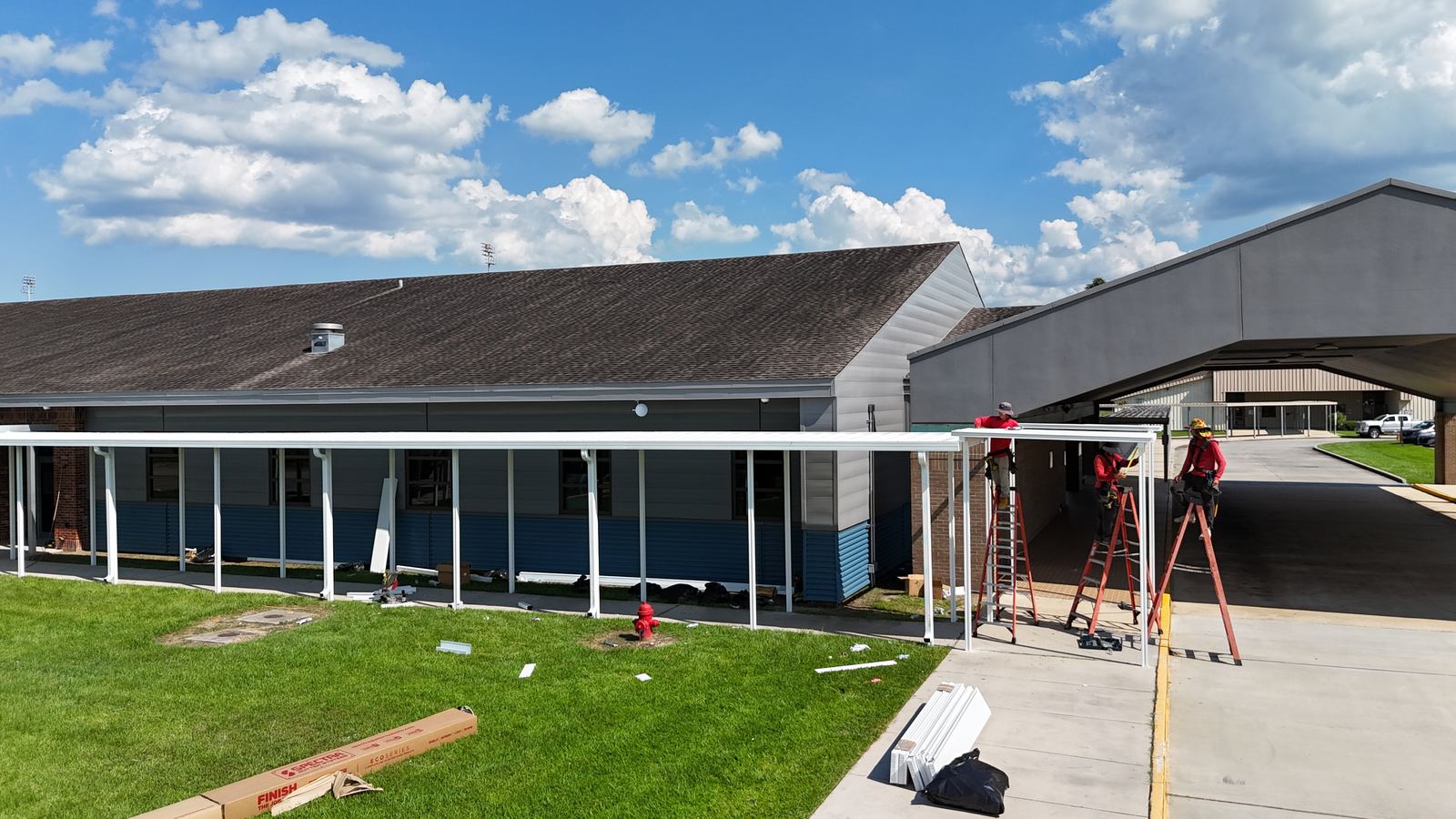
Retrofit work on historic French Quarter and Warehouse District box gutters often means relining in place rather than full replacement.
Why GuttersTech
Why Choose GuttersTech for Either System
Whichever system your property needs, having one contractor who genuinely works in both categories simplifies the decision considerably.
Custom Seamless K-Style Fabrication
GuttersTech's seamless gutter installation process fabricates K-style gutters on site to the exact length of a residential roofline, in 5-inch and 6-inch sizing, aluminum or copper, matched to the architectural style of your home rather than pieced together from stock sectional gutters. A properly formed seamless gutter has no joints along a straight run, which is the same fabrication advantage covered in more detail elsewhere on this site.
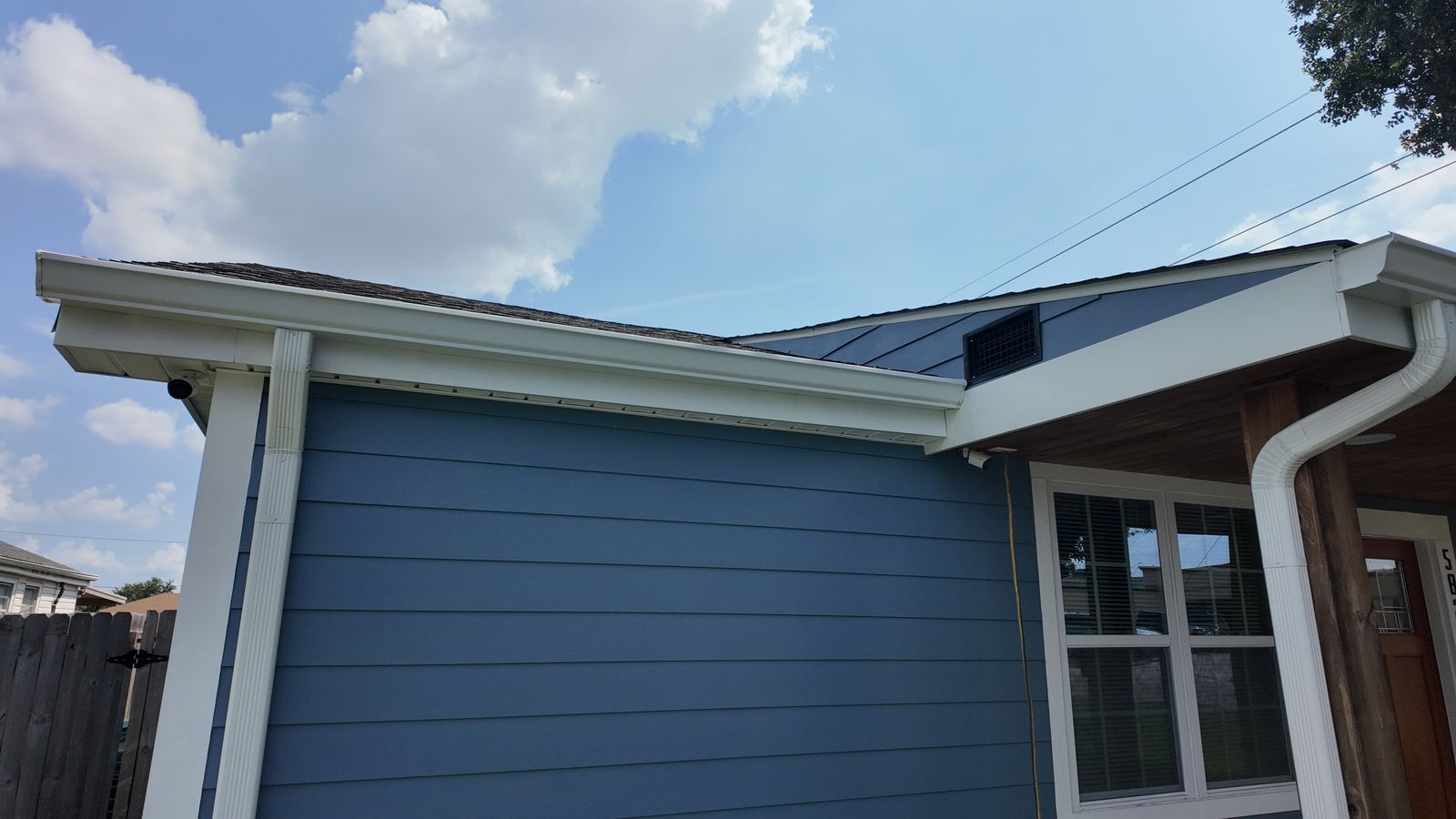
Seamless K-style gutters are formed on site to the exact length of the roofline, in 5-inch or 6-inch sizing.
Commercial Box Gutter Installation and Repair
For commercial properties, GuttersTech installs and repairs box gutter systems sized correctly against actual roof drainage area and Gulf Coast rainfall intensity, using modern EPDM lining rather than the aging felt or metal linings still found on many older commercial buildings, and sized to meet current overflow drain requirements rather than whatever the building happened to have decades ago.
Serving Both Residential and Commercial Clients Across New Orleans and the Emerald Coast
GuttersTech serves both residential and commercial properties across New Orleans and the Emerald Coast as a single point of contact for gutters, roofing, and siding, which matters most on a mixed-use or large commercial project where box gutter work often needs to be coordinated with a broader roofing scope rather than handled as an isolated line item. A property manager juggling a hotel, condo building, or historic commercial property doesn't need to separately vet a gutter specialist, a roofer, and a siding contractor when one team can scope the whole exterior at once, sequence the work correctly, and stand behind all of it under a single warranty rather than three separate ones with three separate finger-pointing opportunities if something goes wrong at the seams between trades.
| Factor | K-Style (Residential) | Box Gutter (Commercial) |
|---|
| Standard sizes | 5" and 6" | 7" to 10"+ |
| Water capacity | 1.2–2 gal/ft | Substantially higher |
| Mounting | Hung from fascia | Built into roofline |
| Install cost per linear foot | $6–$13 | $12–$30+ |
| Typical lifespan | 20+ years | Depends on lining |
| Code requirements | Standard | Overflow scuppers (IBC) |
| Best fit | Homes, townhomes | Flat/low-slope commercial roofs |
Frequently Asked Questions
Are box gutters more expensive than K-style gutters?
Yes, generally. Box gutters typically cost $12 to $30 or more per linear foot installed versus $6 to $13 for a standard residential K-style system, mainly because box gutters require custom on-site fabrication rather than a stock profile.
Can a residential home have box gutters?
Yes, though it's uncommon. A large residential property, a historic home with an original box gutter roofline, or a home with an unusually large or flat roof area can all be legitimate candidates for box gutters instead of standard K-style.
How often do commercial box gutters need maintenance?
At least an annual inspection and cleaning, with more frequent checks in a heavy tree-canopy area or ahead of hurricane season. Because box gutters sit above finished interior space on many buildings, a missed leak can cause real water damage before it's visible from the ground.
What material lasts longest in a coastal or humid climate?
Aluminum with a marine-grade finish and stainless steel fasteners generally performs best near the Gulf Coast, and copper, while more expensive, resists both salt-air corrosion and humidity-driven wear better than standard steel over a multi-decade lifespan.
Schedule a Commercial or Residential Gutter Consultation
Choosing between commercial box gutters and residential K-style really comes down to your roof's drainage area, your building type, and how your property needs to perform during Gulf Coast rainfall rather than a generic national rule of thumb. GuttersTech can evaluate your roof, run the sizing math against actual local rainfall intensity, and recommend the right gutter system whether that's a custom seamless K-style install or a fully engineered commercial box gutter system.