Wood / Vinyl / Aluminum: Traditional Soffit
Fiber Cement: Hardie Soffit
Why Hardie Soffit Is Ideal for Louisiana's Humidity and Termite Risk
Why choose Hardie soffit over wood, vinyl, or aluminum — and where its termite and moisture resistance actually has limits worth knowing before installation.
Ordinary soffit materials weren't engineered for what a New Orleans or Destin attic actually deals with: sustained humidity, one of the country's most aggressive termite populations, and hurricane-force wind pressure hitting the underside of the eave.
HardieSoffit panels are fiber cement — a mix of cement, sand, and cellulose fibers that gives termites nothing to eat and gives moisture nowhere to take hold the way it does in wood. This guide breaks down the fiber cement soffit benefits that matter most in this specific climate, where Hardie soffit stands up against wood, vinyl, and aluminum soffit, and where its termite and rot resistance actually has real limits worth knowing before installation. If you're planning an exterior project and want a straight answer on materials, our team can walk your roofline and recommend the right soffit, siding, and fascia package for your home.
The Basics
What Makes Hardie Soffit Different From Ordinary Soffit Materials
Hardie soffit isn't just a different brand of the same material homeowners are used to — it's a fundamentally different material category from wood, vinyl, and aluminum soffit, and that difference is where its termite and moisture resistance actually comes from.
Fiber Cement Composition: Cement, Sand, and Cellulose
HardieSoffit panels are manufactured from a blend of Portland cement, sand, and cellulose fiber rather than the wood pulp, PVC, or sheet metal that make up traditional soffit options. Cement and sand give the panel its density and hardness, while the cellulose fiber adds flexibility and crack resistance without leaving behind the kind of digestible wood tissue termites or fungi can break down. That same composition also gives HardieSoffit a real fiber cement soffit fire resistance advantage: fiber cement is tested non-combustible and carries a Class A fire rating, unlike wood soffit or vinyl, which can soften, melt, or drip when exposed to direct flame. James Hardie products like HardieSoffit and its companion fiber cement siding carry a 30-year, non-prorated warranty, a length of coverage wood and vinyl soffit manufacturers rarely match.
Why Soffit Faces a Different Moisture Challenge Than Wall Siding
Soffit sits in a different weather-exposure position than the siding on a wall: it's sheltered from direct, driving rain, but it faces near-constant humidity, trapped attic heat, and airflow moving in and out through its perforations if it's vented. Wall siding sheds water quickly and dries between storms; soffit facing downward under an overhang can hold onto humidity far longer in this climate, and that's exactly the condition that lets both rot and pest activity take hold in vulnerable materials.
The Pest Risk
The Termite Problem: Why Louisiana Homes Are at Special Risk
Generic soffit-material comparisons treat pest resistance as a minor bullet point. In Louisiana, it's one of the biggest reasons homeowners choose fiber cement over wood in the first place.
Formosan Subterranean Termites in New Orleans and the Gulf South
The Formosan subterranean termite is, according to LSU AgCenter, the single most destructive insect species in Louisiana, responsible for more than $500 million in damage across the state every year. First established in the New Orleans area, Formosan termites have since spread into most of Louisiana's parishes, and Orleans Parish itself remains under a state quarantine because of how deeply established the population is there. Formosan colonies grow far larger and feed more aggressively than native subterranean termites, which means wood soffit, fascia, and trim in this specific region face a level of termite pressure most national soffit comparisons never account for.
How Termites Actually Enter Through Eaves, Soffit, and Roofline Trim
Termites don't need a dramatic entry point — a hairline gap where soffit meets fascia, a crack in old caulking, or a section of wood trim making direct contact with damp insulation is enough. The eave and soffit area is a common entry route precisely because it's rarely inspected as closely as the foundation or ground-level trim, and by the time damage is visible from below, termites have often been active in the roofline for a while.
The Real Limits
How Hardie Soffit Resists Termites (and Where the Limits Are)
Hardie soffit's termite resistance is real, but it's worth being precise about what it actually protects against, since overselling it as bulletproof sets homeowners up for the wrong expectations.
No Digestible Food Source — But Not Literally Termite-Proof
Because fiber cement contains no digestible wood tissue for termites to feed on, HardieSoffit panels themselves can't be eaten or hollowed out the way a wood soffit board can. That's a genuine advantage, but it doesn't mean termites can't be present near a Hardie soffit installation — they can still tunnel through adjacent wood framing, fascia, or trim and simply pass by fiber cement panels on their way to a food source elsewhere. Fiber cement removes the soffit itself as a target; it doesn't termite-proof the rest of the structure around it.
Set Realistic ExpectationsFiber cement soffit can't be eaten by termites — but termites can still tunnel through wood fascia or framing right next to it.
Why Moisture Control Still Matters (Cracks, Caulking, and Cellulose)
HardieSoffit panels do contain cellulose fiber, and while it's processed and bonded into the cement matrix rather than left as raw, digestible wood, sustained moisture intrusion at a cracked seam, failed caulk joint, or damaged edge can still soften that fiber content over time. Keeping caulking intact and joints sealed isn't just a cosmetic maintenance item — it's what keeps the material performing the way it's rated to.
Dense Structure That Resists Penetration
The same density that gives fiber cement its strength also makes it far harder for termites to penetrate than untreated wood, which typically offers far less resistance to tunneling. Combined with the lack of a real food source, that density is a meaningful physical barrier — just not an impenetrable one on its own.
Attic Ventilation
Humidity, Attic Ventilation, and Why Soffit Material Matters More Here
Soffit does more than look finished under an eave — vented sections are usually the primary intake point for attic airflow, which means material choice and ventilation strategy are directly connected rather than separate decisions.
Louisiana's Humidity Ranks Among the Highest in the Country
New Orleans regularly ranks among the most humid metro areas in the country, with sustained high relative humidity for most of the year rather than the occasional damp spell a national soffit guide might assume. That constant moisture load is exactly the condition wood soffit struggles with most, since it rarely gets a long enough dry stretch to fully shed absorbed humidity between rain events.
Vented Hardie Soffit and Attic Moisture Control
Vented HardieSoffit panels are manufactured with a perforation pattern that lets outside air move into the attic, working with ridge or gable vents to keep air circulating rather than stagnant. That airflow matters more in a humid climate than a drier one, since stagnant attic air holds onto moisture longer and gives both rot and pest activity a better foothold — the ventilation strategy and the soffit material's own resistance work together rather than as separate line items on a materials list.
How Trapped Attic Humidity Invites Both Rot and Termites
An attic that traps humidity because of inadequate or blocked soffit ventilation creates the exact conditions Formosan and native termites favor, along with the sustained dampness that leads to wood rot in framing and trim. Choosing a fiber cement soffit panel addresses one half of that risk; making sure it's actually vented and that the attic's intake-to-exhaust balance is correct addresses the other half, and skipping either one leaves the attic vulnerable regardless of what the soffit itself is made from.
Material Comparison
Hardie Soffit vs. Other Soffit Materials in a Gulf Coast Climate
Figuring out the best soffit material durability for this specific climate means comparing what's actually failing first in each option, not just a general national durability score.
Hardie Soffit vs. Wood Soffit
Wood soffit can be painted to match any trim color, which still matters for curb appeal on historic New Orleans homes, but it's the material most exposed to the humidity and Formosan termite pressure covered above, and it typically needs the most frequent inspection and repainting of any soffit option in this climate. Hardie soffit trades some of wood's traditional flexibility for meaningfully lower long-term maintenance and no digestible termite food source.
Hardie Soffit vs. Vinyl Soffit
Vinyl soffit costs less upfront and never needs painting, but it's a plastic product that softens, warps, or cracks under sustained heat and UV exposure, and that vulnerability is worse in a climate with long, intense summers like Louisiana's or Florida's Gulf Coast. Hardie soffit vs vinyl soffit really comes down to upfront cost versus long-term stability — vinyl can visibly sag or discolor within a decade of full sun exposure, while fiber cement holds its shape and factory-applied ColorPlus Technology finish considerably longer.
Hardie Soffit vs. Aluminum Soffit
Aluminum soffit resists pests and rot outright, since it's not an organic material at all, but it's a soft metal that dents easily under impact from ladders, storm debris, or routine gutter work, and its seams and fasteners can pit or corrode over time in a coastal environment. Fiber cement doesn't dent the way aluminum does and holds paint more evenly across a wider color range.
| Material | Main Weakness in This Climate | Termite / Pest Risk |
|---|
| Wood Soffit | Absorbs humidity, needs frequent repainting | High — a real food source for termites |
| Vinyl Soffit | Softens, warps, or cracks under heat and UV | Low, but no fire resistance |
| Aluminum Soffit | Dents; seams and fasteners can corrode | Low, fully inorganic |
| Hardie Soffit | Requires caulk/joint maintenance | Low — no digestible food source |
Salt Air and Corrosion Resistance for Destin Coastal Homes
Along Destin and the Emerald Coast, airborne salt is its own durability test that a New Orleans-focused comparison wouldn't fully capture. Salt-laden air speeds up corrosion at aluminum soffit's seams and fasteners and accelerates paint failure on any painted surface faster than a standard humidity-only estimate would predict. Fiber cement's cement-based composition doesn't corrode the way metal does, and HZ10-rated HardieSoffit panels are specifically engineered for the combination of salt air, humidity, and hurricane wind exposure this stretch of coastline sees every year.
New OrleansHumidity + Termites
Sustained humidity and severe Formosan termite pressure make fiber cement soffit's pest resistance the priority.
Destin / Emerald CoastSalt Air + Wind
Airborne salt corrodes metal seams and fasteners faster; HZ10-rated fiber cement resists both salt and wind.
Storm Performance
Hurricane Season and Soffit Performance
Soffit failure during a hurricane isn't just cosmetic — once it fails, it opens a direct path for wind-driven rain into the attic, and that's a different risk profile than wall siding simply blowing off.
Wind Uplift at the Soffit: A Common Storm Failure Point
Hurricane-force wind doesn't just push against a wall — it can get up underneath an eave and create uplift pressure on the soffit from below, a failure mode building-science researchers have documented repeatedly after major storms. Fascia often fails first, exposing the soffit's edge to that uplift, which is why soffit-specific wind resistance deserves its own conversation rather than being lumped in with a home's general wall-siding wind rating. Florida's building code has required soffit systems to withstand the same design wind pressures as windows since 2006, a standard most soffit-material comparisons don't mention at all.
Soffit-Specific Wind RatingWind uplift at the soffit is a distinct failure mode from wall-siding blow-off — and it's rarely rated separately by competing soffit brands.
HardieZone Engineering for Louisiana's Climate
James Hardie rates its most weather-resistant HardieSoffit products for HZ10 climate zones, the company's designation for regions facing the exact weather conditions this coastline sees every year — hurricane-force wind, high humidity, and heavy rainfall — a category that covers both New Orleans and the Destin coastline. Confirming HZ10-rated product and a fastening schedule that matches the manufacturer's spec matters more to real-world wind performance than any of the cosmetic differences between soffit brands.
The soffit is often where a hurricane finds its way in — not the wall.
Upkeep
Maintaining Hardie Soffit's Termite and Moisture Resistance
Fiber cement soffit is part of a genuinely low-maintenance exterior compared to wood, but less upkeep isn't no upkeep — a short annual routine keeps its termite and moisture resistance performing the way it's rated to.
Inspect and Reseal Caulking Regularly
Check the caulk joints where soffit meets fascia, corner trim, and any penetration at least once a year, and reseal any joint that's cracked, shrunk, or pulled away. This is the single most effective way to prevent the moisture intrusion that can soften cellulose content over time or create a hidden entry point for pests.
Keep Gutters, Downspouts, and Drainage Clear
Clogged gutters hold water against the fascia and soffit line longer than a properly draining system does, and that sustained contact is exactly the condition that stresses caulk joints and finishes fastest. Keeping gutters and downspouts clear protects the soffit indirectly by keeping water moving off the roofline instead of pooling against it.
Annual Maintenance ChecklistInspect caulk joints, clear gutters and downspouts, and wash panels once a year — a short routine that protects the resistance the material is rated for.
Wash Soffit Panels and Trim Trees Near the Roofline
A simple annual wash removes pollen, mildew film, and airborne salt residue before it has a chance to etch into the finish, and trimming back tree limbs that brush against the soffit reduces both moisture retention in shaded sections and physical wear on the panel surface.
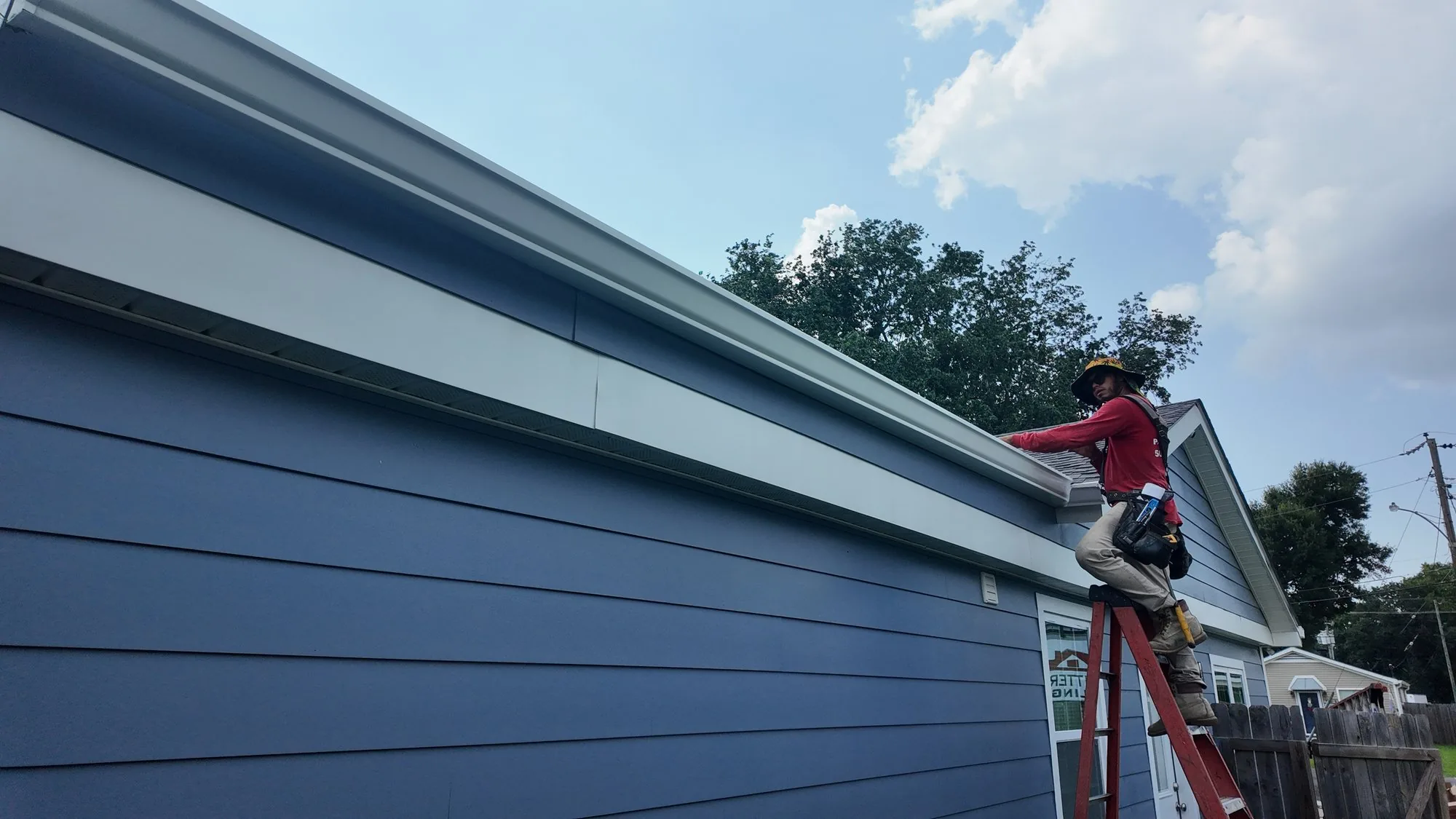
A properly fitted soffit panel is part of what makes a Hardie soffit system perform the way it's rated to.
Frequently Asked Questions
Is Hardie soffit really termite-proof?
Not entirely. Fiber cement gives termites no digestible food source, which removes the soffit panel itself as a target, but termites can still tunnel through nearby wood framing, fascia, or trim. Hardie soffit is termite-resistant, not a termite-proofing solution for the whole structure.
Can termites still get into a home with Hardie soffit installed?
Yes, if there's untreated wood elsewhere in the roofline — exposed rafter tails, wood fascia, or wood trim — termites can still gain entry through those materials even with fiber cement soffit in place. Pairing fiber cement soffit with fiber cement or properly treated fascia closes that gap.
Does Hardie soffit help with New Orleans' humidity and mold?
It helps more than wood or vinyl by not absorbing moisture the way wood does and not warping under sustained heat the way vinyl can, but the soffit still needs to be properly vented and free of trapped moisture at cracked joints for the best mold and mildew resistance. Material choice and ventilation work together, not separately.
Is Hardie soffit better than aluminum soffit in hurricane-prone areas?
For salt-air corrosion resistance and long-term finish durability, generally yes; for outright wind-uplift resistance, both perform well when they're rated for the correct HardieZone or equivalent wind-pressure standard and fastened to spec. Aluminum is more prone to denting from storm debris, while fiber cement holds its shape better under impact.
How much does Hardie soffit installation cost in Louisiana?
Cost depends on soffit width, overhang complexity, vented versus non-vented profile, and how much existing damage needs to be addressed before installation. Treat any general figure as a national or regional average, not a quote — request a free inspection for pricing based on your home's actual roofline.
Get a Free Hardie Soffit Consultation
Choosing the right soffit material matters more in Louisiana and along the Gulf Coast than it does almost anywhere else in the country, given the combination of humidity, Formosan termite pressure, and hurricane wind exposure this region deals with every year. Talk to our team about Hardie soffit, siding, and fascia as a coordinated exterior package — whether that's HardieSoffit alone or paired with Hardie siding like HardiePlank lap siding and trim — so your soffit continues to protect your home the way it's designed to, no matter if you're replacing storm damage, upgrading from wood or vinyl, or planning a full exterior remodel.