Vinyl / Wood: Traditional Siding
Fiber Cement: HardiePlank
What Is HardiePlank Siding? A Complete Homeowner Guide
What is HardiePlank siding, and is it worth the higher upfront cost compared to vinyl? A complete breakdown of what it's made of, why it's engineered for the Gulf South, and what it actually costs.
Also known simply as Hardie Plank siding, or sometimes generically as Hardie board siding, HardiePlank lap siding is James Hardie's fiber cement product line built to mimic the look of wood siding without wood's vulnerabilities.
It's a mix of cement, sand, and cellulose fiber engineered to resist the moisture, pests, and severe weather that ordinary siding struggles with, especially in a climate like New Orleans' or Destin's. This guide covers what it's actually made of, why James Hardie engineers a specific version for the Gulf South, the siding styles and profile options available, realistic Hardie Plank cost expectations, what installation actually involves, and how to keep it looking right for decades. If you've been asking what is Hardie Plank siding and whether it fits your home, our team can walk your project from estimate to installation.
The Basics
What Is HardiePlank Siding, Exactly?
Fiber cement siding explained simply: it's a manufactured board made from cement, sand, and cellulose fibers, formed and cured to mimic the look of painted wood without wood's drawbacks. HardiePlank is a specific type of siding — fiber cement boards manufactured by James Hardie Industries into a lap-siding cladding line.
What It's Made Of (Fiber Cement Composition)
HardiePlank boards are manufactured from a blend of Portland cement, sand, and cellulose fiber, cured under controlled conditions into a dense, stable, long-lasting board. Cement and sand give the material its strength and rigidity, while the refined cellulose fiber adds workability and crack resistance without leaving behind the kind of digestible wood tissue that attracts pests like termites and rodents, or feeds rot. That composition is also what gives it excellent fire resistance — a non-combustible, Class A fire rating that neither wood nor vinyl siding can match.
How It's Different From Vinyl, Wood, and Other Sidings
Vinyl siding is a thin plastic panel that flexes, can crack or warp with sudden temperature changes, can soften near heat sources, and generally struggles with the kind of extreme temperature swings this climate produces; wood siding looks and paints beautifully but is vulnerable to moisture damage, pests, and rot without diligent upkeep. HardiePlank sits in a different category entirely — it's moisture resistant, holds paint like wood, resists impact better than vinyl, and delivers that look without the maintenance either alternative demands, all while denying termites, rot, or fire the foothold either of those materials can give.
Climate Engineering
Why HardiePlank Is Engineered for the Gulf South
The core Hardie Plank benefits for this specific climate break down into five areas most national siding guides never separate out: climate-zone engineering built to withstand harsh Gulf Coast conditions, termite resistance, hurricane wind performance, salt-air corrosion resistance, and fire resistance relevant to how closely New Orleans homes are often built.
HZ10: The Climate Zone Built for Humidity, Not Just Cold
James Hardie engineers its siding for ten different HardieZone climate zones, split into two broad categories: HZ5, built for freeze-thaw cycles and snow load in northern and central states, and HZ10, built for hurricane-force wind, high humidity, and heavy rainfall in southern and coastal states. Louisiana and the Florida Gulf Coast fall squarely in HZ10, which means the version of HardiePlank engineered for a New England winter isn't the version that should go on a New Orleans or Destin home — confirming HZ10-rated product with a local installer matters more than most homeowners realize.
Termite Resistance — Naming Formosan Termites Directly
Louisiana faces a termite problem most siding guides don't name specifically: the Formosan subterranean termite, which LSU AgCenter identifies as the single most destructive insect species in the state, causing more than $500 million in damage annually, with Orleans Parish itself under a state quarantine because of how established the population is. Wood siding can attract termites and gives Formosan termites exactly what they need to feed; HardiePlank's fiber cement composition contains no digestible wood tissue, removing the siding itself as a target.
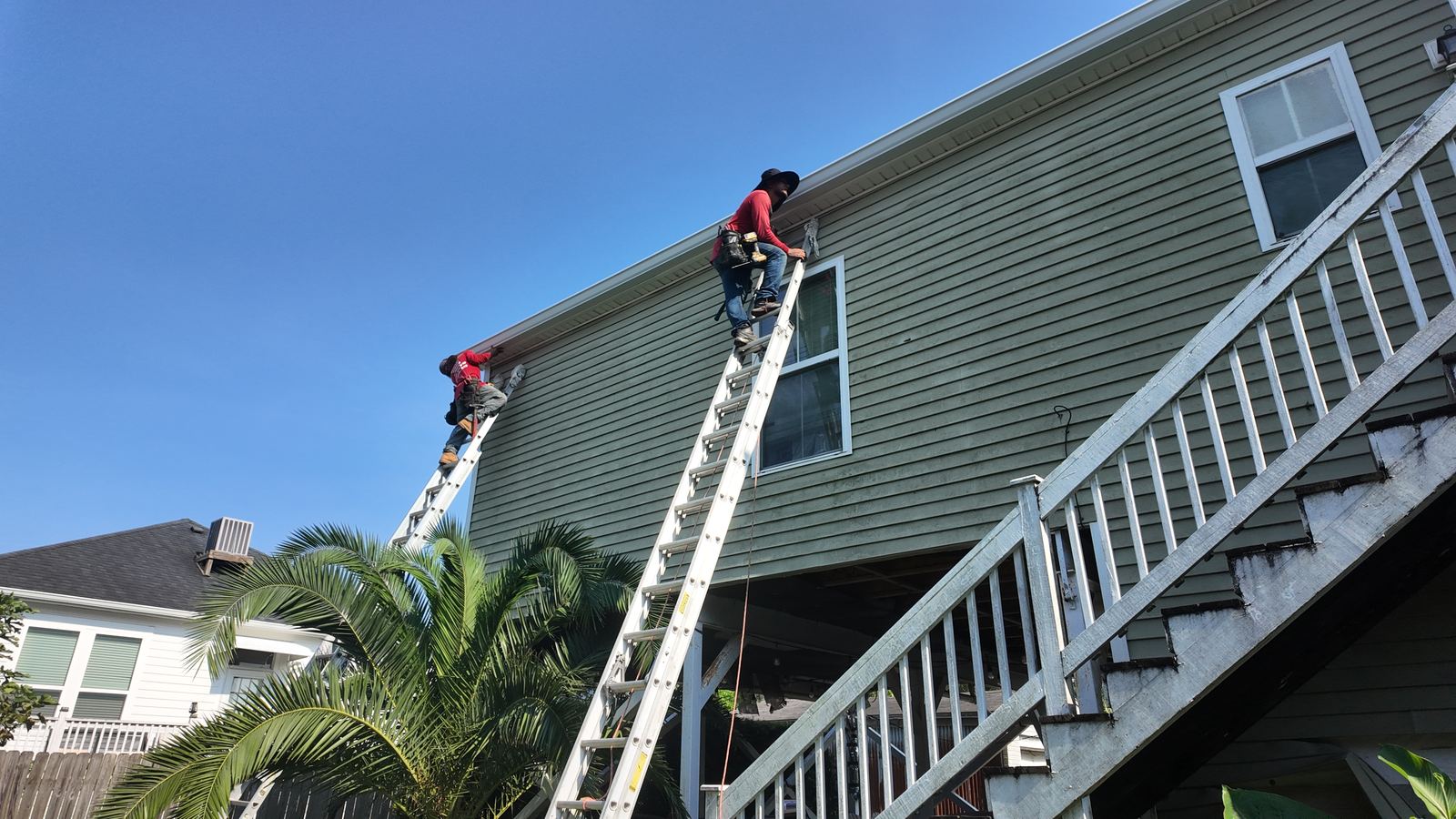
HZ10-rated HardiePlank is engineered specifically for the humidity, termite pressure, and storm exposure New Orleans and Destin homes deal with year-round.
Standing Up to Hurricane Wind-Driven Rain
Hurricane-force wind doesn't just test how well siding is fastened — it drives rain sideways and upward behind panels that aren't sealed or rated for that kind of pressure, a failure mode ordinary rainfall never produces. HZ10-rated HardiePlank, installed to the manufacturer's fastening spec, is engineered specifically for that wind-driven-rain exposure, high winds, and other extreme weather rather than the lighter wind ratings a national siding comparison usually assumes.
Salt-Air Corrosion Resistance Along the Emerald Coast
Along Destin and the Emerald Coast, airborne salt is a durability test in its own right — it accelerates paint failure and corrodes metal fasteners and trim faster than a standard humidity estimate would suggest. Fiber cement's cement-based composition doesn't corrode the way metal siding or fasteners can, making it highly resistant to that specific combination of salt, humidity, and wind that HZ10-rated HardiePlank is built to hold up against.
A Regional Fire ArgumentMany historic New Orleans homes sit close enough together that fire can spread from one exterior wall to the next — non-combustible HardiePlank doesn't feed that spread the way wood siding can.
Fire Resistance and Closely-Spaced Historic Homes
Fire resistance matters differently in New Orleans than it does in a wildfire-prone western state: many historic New Orleans homes, especially shotgun houses and rowhouses in older neighborhoods, sit close enough together that a fire on one structure can spread to a neighbor's exterior wall before anyone can react. Non-combustible HardiePlank siding won't ignite and doesn't feed that kind of exterior fire spread the way wood siding can, which is a genuinely regional argument for fiber cement that most competitor content never makes — and one more reason it's an excellent choice for homeowners protecting the exterior of their homes in this specific setting.
New OrleansHumidity + Termites + Fire Spread
Sustained humidity, severe Formosan termite pressure, and closely-spaced historic homes make HZ10-rated, non-combustible fiber cement the priority.
Destin / Emerald CoastSalt Air + Hurricane Wind
Airborne salt corrodes fasteners and trim faster; HZ10-rated HardiePlank resists both salt and wind-driven rain.
Styles & Profiles
HardiePlank Styles and Profiles
HardiePlank offers a variety of styles and two surface textures, with options available to match almost any architectural style and boost curb appeal — none of it affects the climate performance covered above.
Lap Siding Profiles (Traditional Lap, Beaded Lap, Colonial/Dutch Lap)
Traditional Lap has a flat, slightly tapered board with a subtle shadow line for the cleanest, most linear look. Beaded Lap adds a small rounded bead along the bottom edge of each board, casting a crisper, more defined shadow line. James Hardie's Custom Colonial profile — often called Colonial Lap or Dutch Lap informally — has a beveled top edge that creates a deeper, more sculpted shadow line than either of the other two. A board and batten vertical siding look is also available, achieved by pairing HardiePanel with HardieTrim battens over the seams rather than as a single lap product.
Textures — Select Cedarmill vs. Smooth
Select Cedarmill carries a wood grain texture cast from real wood templates, giving it a non-repetitive, natural wood look that reads as traditional from a normal viewing distance. Smooth is a flat, uniform surface that leans more contemporary and shows a more even paint finish. Both textures carry over to HardieSoffit panels, so a homeowner can match texture across siding, trim, and soffit for a coordinated exterior.
ColorPlus Technology: Factory-Baked Finish vs. Field-Painted
ColorPlus Technology is James Hardie's factory-applied, multi-coat baked-on finish available in a wide range of colors, and it resists fading from constant UV exposure far longer than a standard field-applied paint job, since it's cured under controlled conditions rather than exposed to weather before it's even fully set. That finish is part of what helps HardiePlank maintain its appearance for years longer than field-applied paint — some color change over time, up to about 4 points on the delta-E scale, is considered normal weathering rather than a defect, so a slight shift shouldn't be mistaken for finish failure.
Traditional LapClean & Linear
Flat, slightly tapered board with a subtle shadow line.
Beaded LapCrisper Shadow Line
A small rounded bead casts a more defined shadow line.
Custom ColonialSculpted Bevel
Often called Colonial or Dutch Lap; a beveled top edge, deeper shadow.
Board & BattenVertical Look
HardiePanel plus HardieTrim battens over the seams.
Budgeting
How Much Does HardiePlank Siding Cost?
Hardie Plank cost varies more than most online estimates suggest, and the honest answer is that a national average range is only a starting point for budgeting, not a quote.
Cost Factors: Style, Texture, Home Size
Whether for new construction or a full siding replacement, installed HardiePlank siding commonly runs somewhere in the $8 to $15 per square foot range nationally, with the Gulf South often trending toward the lower end of that range and colder regions toward the higher end, though local labor rates, home size, profile choice, and whether old siding needs removal all move the number. ColorPlus factory finish typically adds a modest amount over field-painted options, offset by not needing a repaint for many years. Treat any number here as a planning range, not a quote — request a project-specific estimate for pricing based on your home. Its lifespan often extends well beyond that of cheaper alternatives, which is part of why the higher entry price tends to even out over time.
HardiePlank vs. Vinyl vs. Wood: Long-Term Value
HardiePlank costs more than vinyl upfront, and traditional wood's lower initial cost looks similar on paper, but wood needs frequent painting and both alternatives need replacement or heavy maintenance sooner in a climate this demanding. Of the three siding options, its higher upfront cost is offset by a 30-year non-prorated warranty, genuine resilience against this climate's worst conditions, and a repaint cycle measured in over a decade rather than every few years — that longevity and minimal maintenance are where its case as a durable siding choice actually holds up, often reflected in a stronger resale value of your home for homeowners planning to stay in it for years.
| Material | Upfront Cost | Long-Term Value |
|---|
| Vinyl | Lowest | Needs replacement soonest in this climate |
| Wood | Low to moderate | Highest ongoing maintenance |
| HardiePlank | Higher | 30-year warranty, longest repaint cycle |
Installation
Installation: What Homeowners Should Know
HardiePlank installation isn't a weekend DIY home improvement project the way vinyl siding sometimes is, and choosing the right siding contractor matters as much as the material choice itself — siding installation may also involve permitting or historic-district approval, covered below, before work on your next exterior project can even begin.
Why Professional Installation Matters (Weight, Tools, Silica Safety)
Fiber cement siding weighs roughly three to five times more per square foot than vinyl, which means more crew, different bracing, and specialized fasteners compared to a lightweight plastic panel. Cutting fiber cement also produces respirable crystalline silica dust, a real workplace hazard OSHA regulates closely — proper technique uses wet-cutting methods, fiber-cement shears, or saws fitted with dust collection rather than uncontrolled dry-cutting, which is exactly why professional siding installation matters more here than it does for a lightweight plastic panel.
Silica Dust SafetyCutting fiber cement produces respirable crystalline silica — wet-cutting, shears, or dust-collecting saws are the correct method, not uncontrolled dry-cutting.
What to Expect During a HardiePlank Install
A typical installation involves removing or preparing the existing siding, addressing any moisture or pest damage found underneath before the new material goes up, and installing HardiePlank to the manufacturer's HZ10 fastening spec rather than a generic pattern. Expect a walk-through at the end confirming caulk joints, flashing, and clearances are all correct before the crew calls the job complete.
Historic District Approval: French Quarter and Garden District Rules
Homeowners in the French Quarter fall under the Vieux Carré Commission, while much of the Garden District and other local historic districts fall under the Historic District Landmarks Commission — and both generally require approval before changing exterior siding material on anything visible from the public right-of-way. Switching siding material from wood to fiber cement is exactly the kind of change that typically needs commission review rather than being assumed automatic, so it's worth checking with HDLC or VCC before ordering material for a home in one of these districts.
The right siding for a French Quarter home still has to clear a commission before it clears a delivery truck.
Upkeep
Maintaining Your HardiePlank Siding
HardiePlank is a low maintenance option compared to wood siding, coming closer to maintenance-free than any other material discussed here, but a short annual routine still protects the resistance it's built to deliver on your home exterior.
Routine Cleaning and Caulk Inspection
A garden hose and soft-bristle brush handle most routine cleaning, removing pollen, mildew film, and salt residue before it has a chance to etch into the finish. Check caulk joints around trim, corners, and penetrations once a year, resealing anything cracked or pulled away to keep moisture from working its way behind the boards.
Repainting Timeline (15-Year ColorPlus Warranty Considerations)
ColorPlus Technology finish is backed by a 15-year warranty against fading, peeling, and cracking, while the substrate itself carries James Hardie's 30-year, non-prorated warranty — together, that's the James Hardie siding warranty coverage homeowners should understand before choosing a finish option. Field-painted HardiePlank typically needs repainting on a shorter cycle than ColorPlus, and in a climate with this much sun and salt exposure, that gap tends to show up sooner than it would up north.
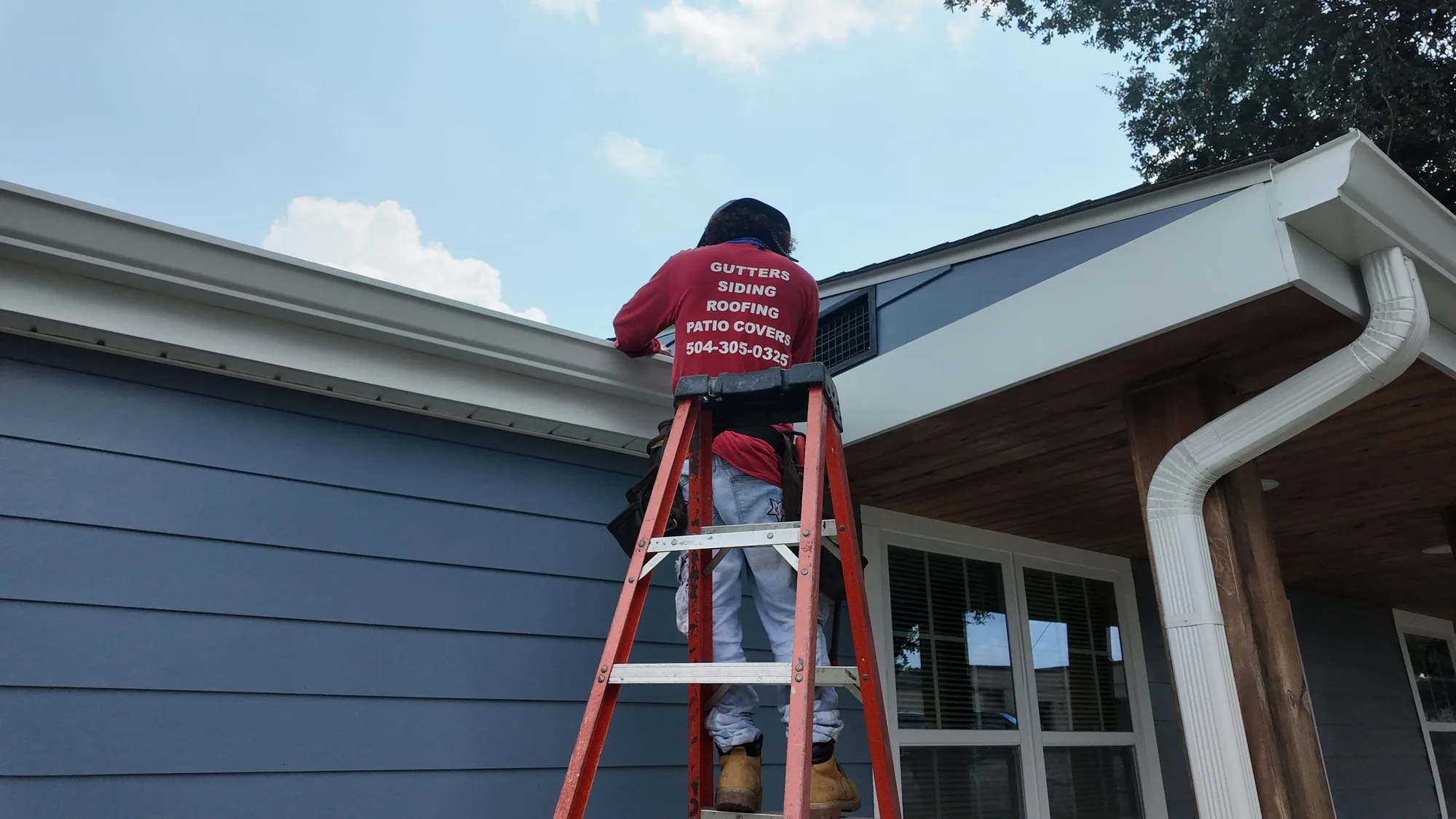
A close look at HardiePlank lap siding going in board by board along the roofline.
Frequently Asked Questions
Is HardiePlank siding really termite-proof?
Not entirely. Fiber cement gives termites no digestible food source, which removes the siding itself as a target, but termites can still access a home through untreated wood trim, framing, or fascia nearby. HardiePlank is termite-resistant, not a termite-proofing solution for the whole structure.
Can HardiePlank withstand hurricane-force winds?
Yes, when it's HZ10-rated product installed to the manufacturer's fastening spec — that combination is what's actually been engineered for hurricane-force wind and wind-driven rain, not the siding material alone. An improperly fastened or non-HZ10 product won't perform the same way in a real storm.
How does HardiePlank perform in New Orleans humidity vs. northern climates?
HZ10-rated HardiePlank is specifically formulated for sustained humidity, unlike HZ5 product engineered around freeze-thaw cycling. In practice that means better resistance to the kind of constant moisture exposure New Orleans sees for most of the year, rather than the occasional-dampness assumption built into a northern climate product.
Does HardiePlank need repainting on the Gulf Coast faster than up north?
Field-painted HardiePlank generally does need repainting somewhat sooner in a climate with this much sun, humidity, and salt air, compared to a drier northern climate. ColorPlus factory finish narrows that gap significantly, which is one reason it tends to make more sense in this region than in milder ones.
What's the difference between HZ5 and HZ10 siding?
HZ5 is James Hardie's designation for siding engineered around freeze-thaw cycling and snow load in northern and central climates, while HZ10 is engineered for hurricane-force wind, high humidity, and heavy rainfall in southern and coastal climates like Louisiana and Florida's Gulf Coast. The two aren't interchangeable — installing HZ5-rated product in an HZ10 region skips protection the climate actually requires.
Get a HardiePlank Estimate for Your New Orleans or Destin Home
Choosing the right siding for your home matters more in Louisiana and along the Gulf Coast than it does almost anywhere else, given the combination of humidity, Formosan termite pressure, hurricane wind, and salt air this region deals with every year. Talk to our team about HardiePlank siding as part of a coordinated exterior project — paired with matching soffit, fascia, and gutters for your home's exterior — whether you're replacing storm damage, upgrading from wood or vinyl, or navigating historic district approval for a full exterior remodel.